Recovery from substance use disorder is about more than simply abstaining from drugs or alcohol. It is about building an entirely new life. One of the most powerful yet often overlooked tools in maintaining long-term recovery is the practice of setting healthy boundaries. Whether you are navigating relationships with family members, managing workplace stress, or establishing self-care routines, boundaries create the protective framework that supports lasting sobriety.
At Desert Cove Recovery, our Arizona treatment programs understand that successful recovery requires addressing the whole person. That is why our holistic approach integrates boundary-setting skills alongside traditional 12-step principles and cutting-edge therapeutic techniques tailored specifically for individuals seeking rehab in Arizona.
Understanding Boundaries in Recovery
Boundaries are the limits we establish to protect our physical, emotional, and mental well-being. For individuals in recovery, boundaries are not about building walls. They are about creating healthy spaces where sobriety can flourish.
Many people with substance use disorders have experienced boundary violations or have struggled to maintain their own limits. Learning to set and maintain boundaries becomes essential to recovery because it helps prevent relapse triggers, reduces stress, and builds self-respect, all of which are crucial components of the transformative journey we support at our Scottsdale rehab facility.
Setting Boundaries in Relationships
Family Dynamics
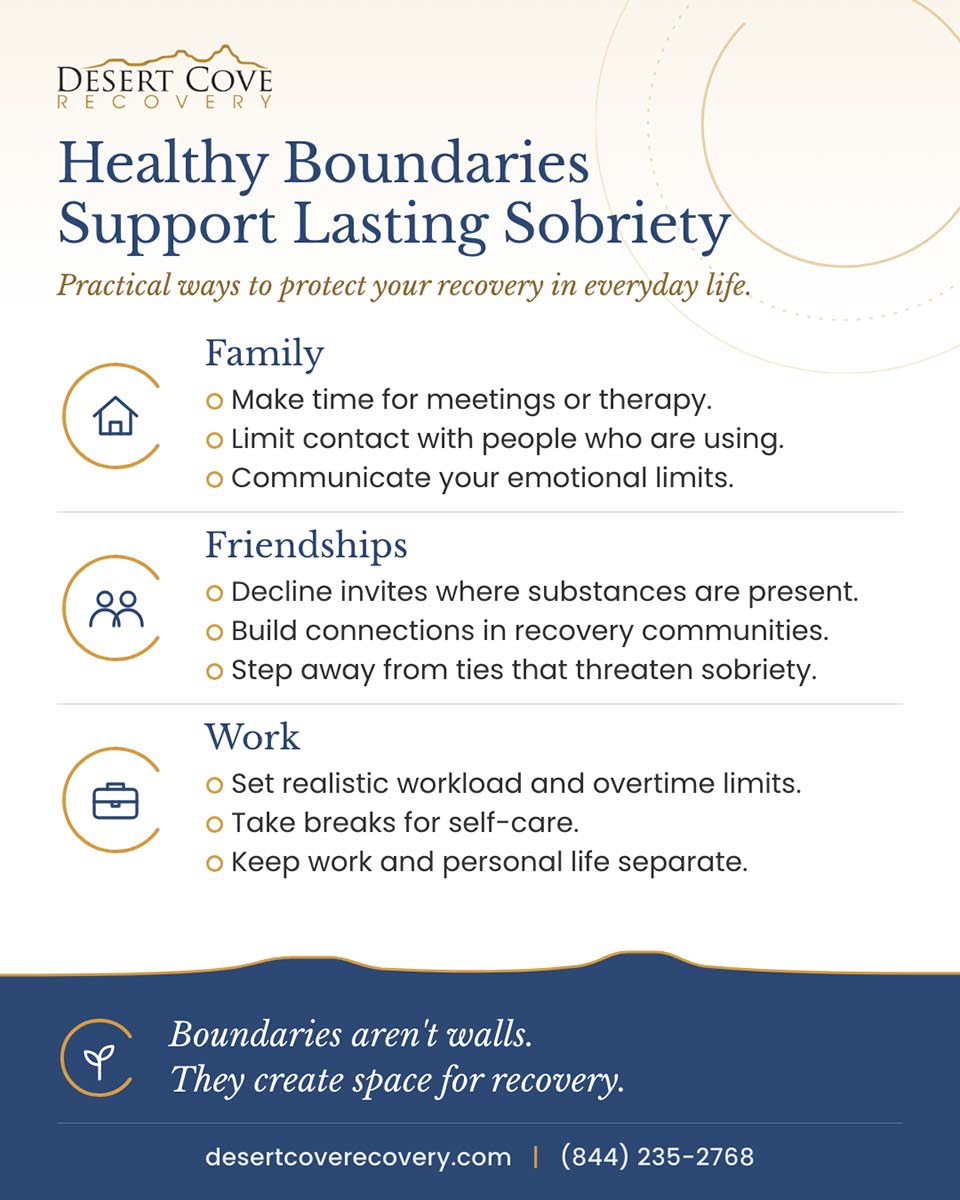
Family relationships can be both supportive and challenging during recovery. Well-meaning loved ones may inadvertently enable old patterns or place unrealistic expectations on someone newly in recovery. Setting boundaries might include:
- Communicating your need for recovery-focused activities like meetings or therapy
- Limiting contact with family members who actively use substances
- Establishing clear consequences when boundaries are crossed
- Being honest about your emotional capacity
Our family therapy program at Desert Cove Recovery helps both individuals in recovery and their families understand how healthy boundaries benefit everyone involved.
Friendships and Social Circles
Recovery often requires difficult decisions about relationships. Setting boundaries with friends might mean:
- Declining invitations to environments where substances are present
- Being transparent about your recovery journey
- Seeking new friendships within recovery communities
- Letting go of relationships that threaten your sobriety
The power of peer support can provide healthy connections that respect and reinforce your boundaries.
Workplace Boundaries
Work-related stress is a common relapse trigger. Establishing professional boundaries protects your recovery while maintaining career success through practices such as:
- Setting realistic limits on overtime and workload
- Taking designated lunch breaks for self-care
- Communicating your needs without over-explaining your recovery
- Creating separation between work and personal life
- Managing workplace relationships appropriately
Managing work-related stress is crucial for maintaining long-term sobriety while building your career.
Self-Care Boundaries: The Foundation of Recovery
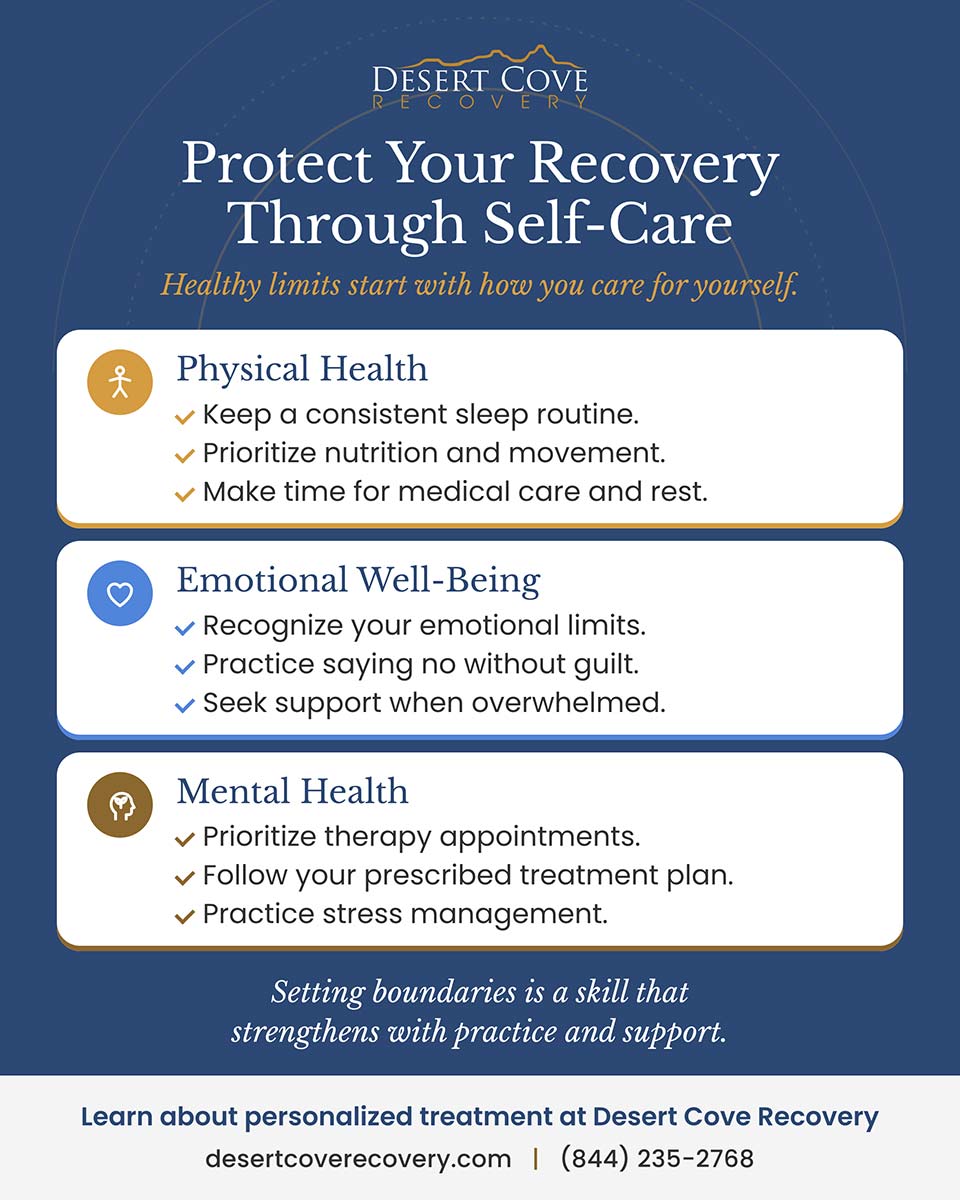
Perhaps the most important boundaries are those you set with yourself. Self-care boundaries include:
- Physical Health: Maintaining consistent sleep schedules, prioritizing nutrition and exercise, attending medical appointments, and respecting your body’s need for rest.
- Emotional Well-being: Recognizing your emotional limits, saying no without guilt, allowing yourself to feel emotions without turning to substances, and seeking support when overwhelmed.
- Mental Health: Our dual diagnosis treatment specializes in treating co-occurring mental health conditions alongside substance use disorders. Setting mental health boundaries means prioritizing therapy appointments, medication compliance, and stress management practices.
Learning Boundary Skills in Treatment
At Desert Cove Recovery, our caring, highly educated professionals with years of experience incorporate boundary-setting skills throughout our customized treatment plans. Whether you are participating in our intensive outpatient program, residential treatment, or teen-specific services at our Arizona rehabs, you will learn practical strategies for establishing and maintaining healthy limits.
Our integrative, holistic approach addresses the underlying issues that make boundary-setting difficult, including trauma, codependency, and low self-esteem. Through individual therapy, group sessions, and family counseling at our Scottsdale rehab center, we help you develop the confidence to protect your recovery.
Building Your Boundary-Strong Recovery
Setting boundaries is a skill that strengthens with practice and support. At Desert Cove Recovery, we are committed to helping you build the framework for a happy, healthy, drug- and alcohol-free life through comprehensive, compassionate care that honors your unique journey.
Our team of highly educated professionals brings years of experience in addiction treatment, integrating 12-Step principles with innovative, cutting-edge therapeutic approaches. We understand that lasting recovery requires more than clinical treatment, as it requires learning the life skills that support sustainable change.
Ready to develop the boundary skills that support lasting recovery? Contact Desert Cove Recovery today to learn more about our customized treatment approaches in Scottsdale, Arizona. Your journey toward transformation begins with a single step, and we are here to walk alongside you with compassion, expertise, and unwavering hope for your future.