Every parent wants their teenager to thrive—emotionally, academically, and socially.
But when your teen appears withdrawn, anxious, or struggling, how can you tell if it’s just normal adolescent stress or something more serious?
Understanding the difference between mental health challenges and mental illness can help parents recognize when professional help is needed and reduce the stigma that keeps so many teens from seeking support.
Understanding Mental Health
Mental health exists on a spectrum, just like physical health. Everyone experiences fluctuations throughout life—from periods of wellness to moments of difficulty.
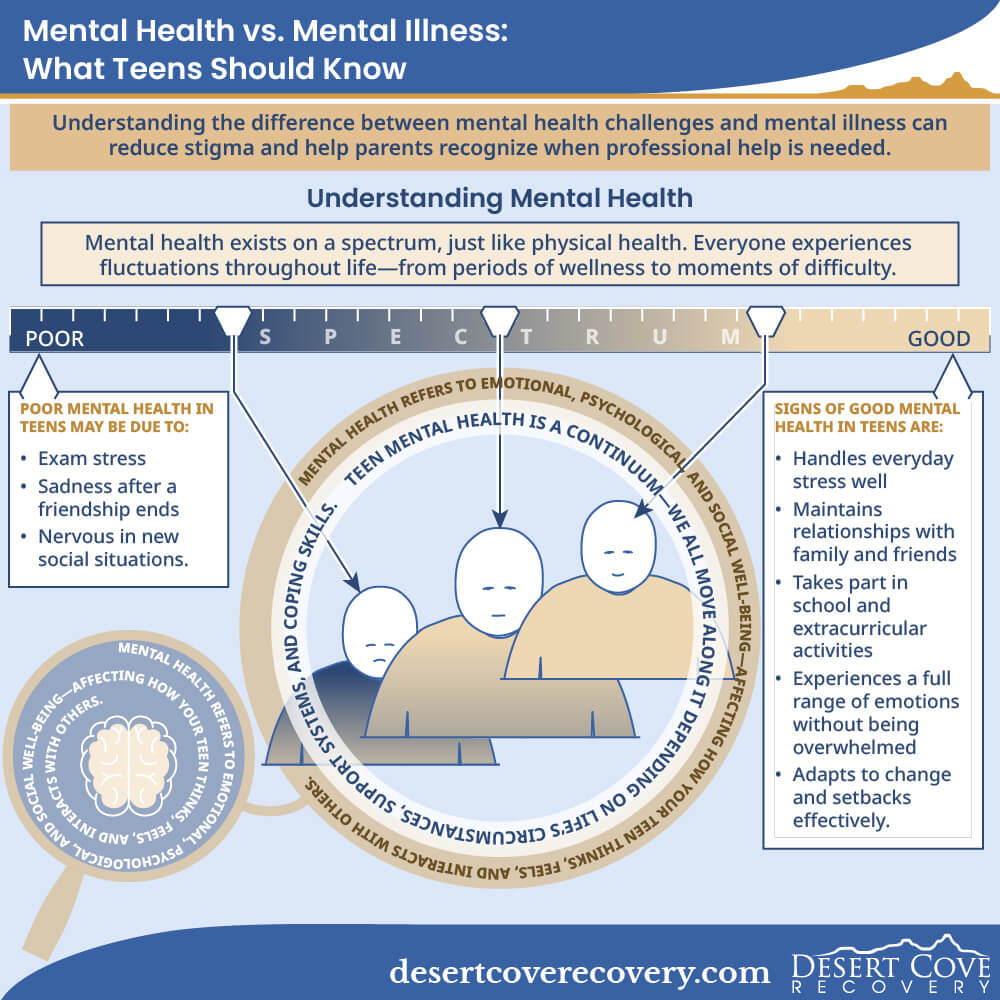
A teen might feel:
- Stressed before exams
- Sad after a friendship ends
- Nervous in new social situations
These reactions are normal and do not automatically indicate mental illness.
Mental health refers to emotional, psychological, and social well-being—affecting how your teen thinks, feels, and interacts with others.
Signs of Good Mental Health in Teens
- Handles everyday stress appropriately
- Maintains relationships with family and friends
- Takes part in school and extracurricular activities
- Experiences a full range of emotions without being overwhelmed
- Adapts to change and setbacks effectively
Think of teen mental health as a continuum—we all move along it depending on life’s circumstances, support systems, and coping skills.
Recognizing Mental Illness in Teens
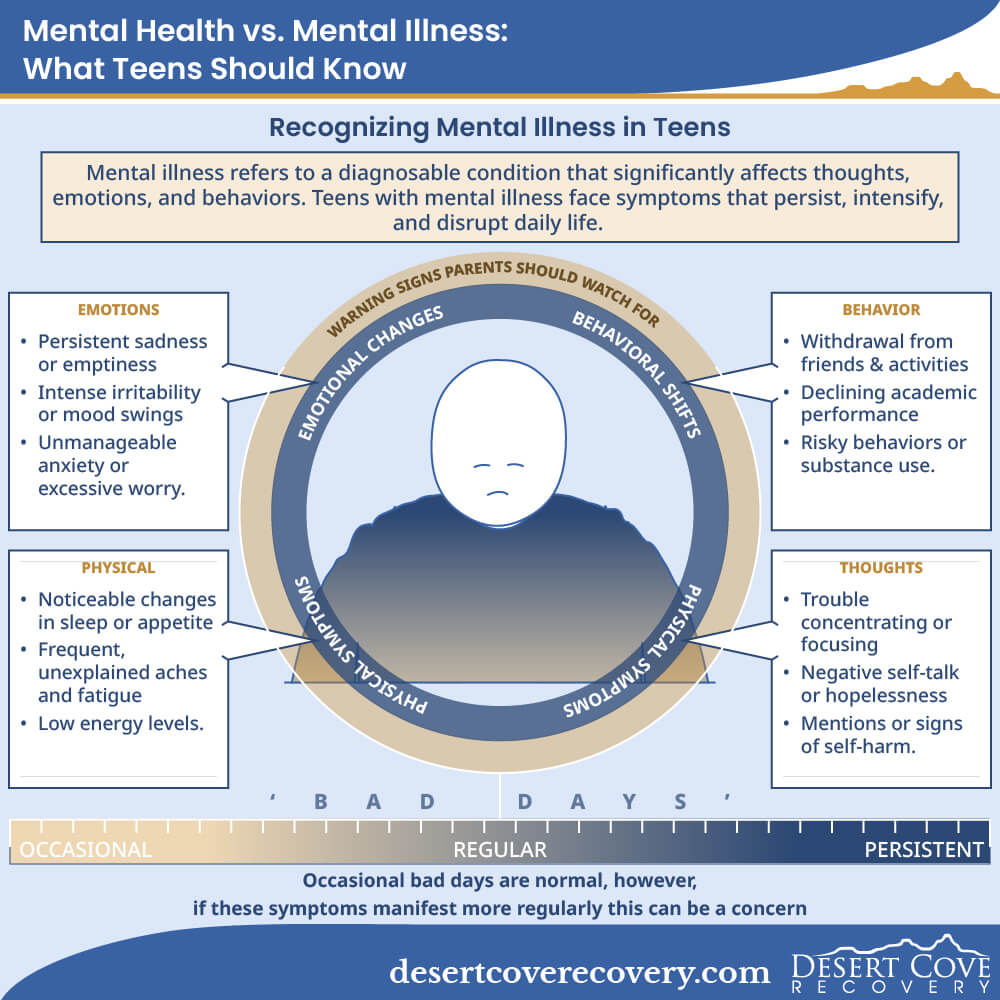
Mental illness, on the other hand, refers to a diagnosable condition that significantly affects thoughts, emotions, and behaviors.
While every teen experiences difficult emotions, those with mental illness face symptoms that persist, intensify, and disrupt daily life.
Warning Signs Parents Should Watch For
Emotional Changes
- Persistent sadness or emptiness
- Intense irritability or mood swings
- Unmanageable anxiety or excessive worry
Behavioral Shifts
- Withdrawal from friends and activities
- Declining academic performance
- Risky behaviors or substance use
Physical Symptoms
- Noticeable changes in sleep or appetite
- Frequent, unexplained aches and fatigue
- Low energy levels
Concerning Thought Patterns
- Trouble concentrating or focusing
- Negative self-talk or hopelessness
- Mentions or signs of self-harm
Tip: Occasional bad days are normal, but persistent symptoms that interfere with functioning warrant professional evaluation.
Common Mental Health Conditions Affecting Teens
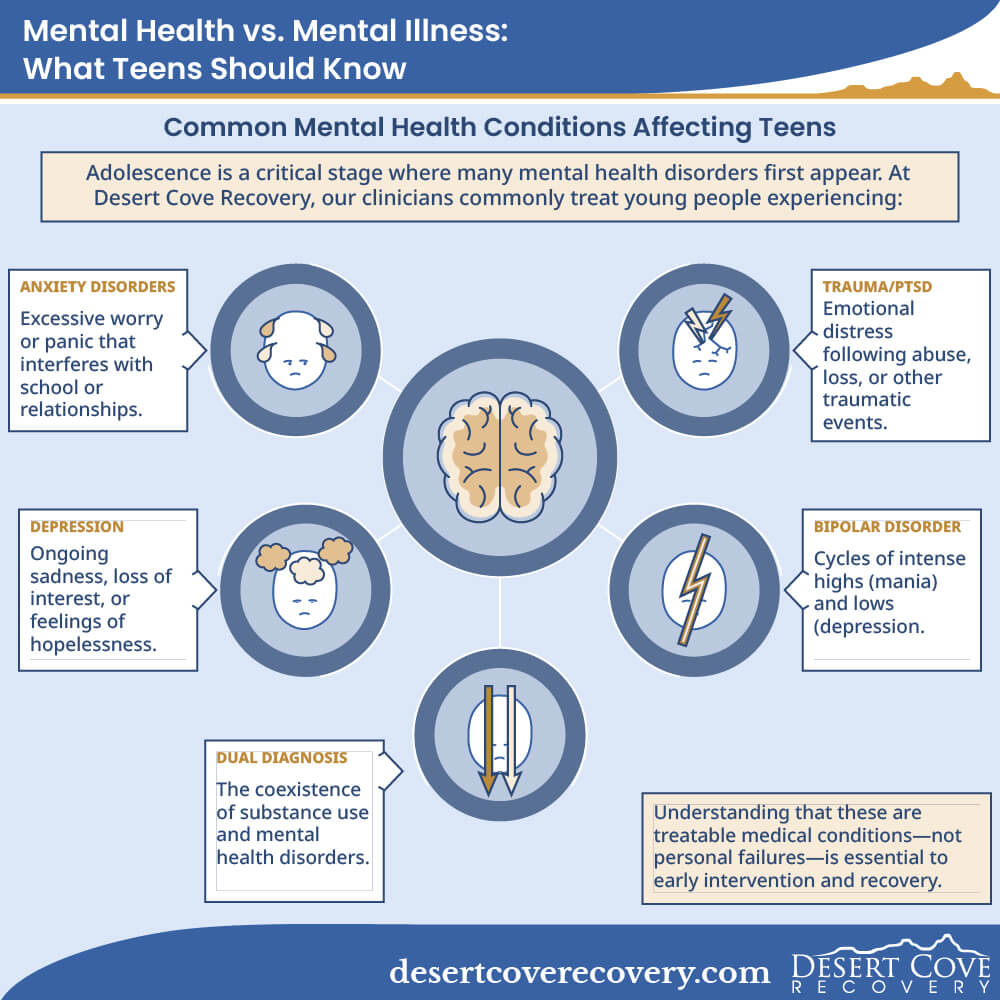
Adolescence is a critical stage where many mental health disorders first appear. At Desert Cove Recovery’s teen program in Arizona, our clinicians commonly treat young people experiencing:
- Anxiety disorders: Excessive worry or panic that interferes with school or relationships
- Depression: Ongoing sadness, loss of interest, or feelings of hopelessness
- Trauma/PTSD: Emotional distress following abuse, loss, or other traumatic events
- Bipolar disorder: Cycles of intense highs (mania) and lows (depression)
- Dual diagnosis: The coexistence of substance use and mental health disorders
Understanding that these are treatable medical conditions—not personal failures—is essential to early intervention and recovery.
The Connection Between Teen Mental Health and Substance Use
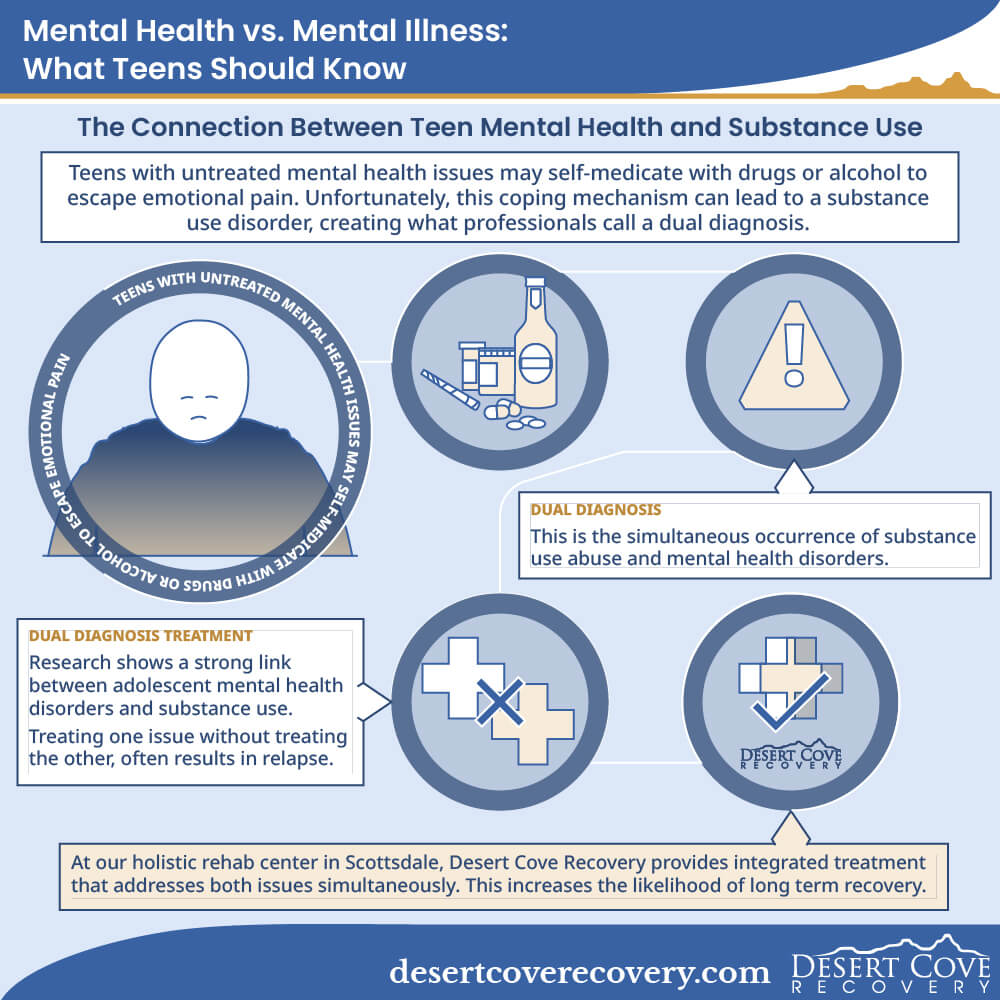
Teens with untreated mental health issues may self-medicate with drugs or alcohol to escape emotional pain. Unfortunately, this coping mechanism can lead to a substance use disorder, creating what professionals call a dual diagnosis.
Research shows a strong link between adolescent mental health disorders and substance use.
At our holistic rehab center in Scottsdale, Desert Cove Recovery provides integrated treatment that addresses both issues simultaneously.
Treating one without the other often results in relapse, while integrated care lays the foundation for lasting recovery.
When to Seek Professional Help
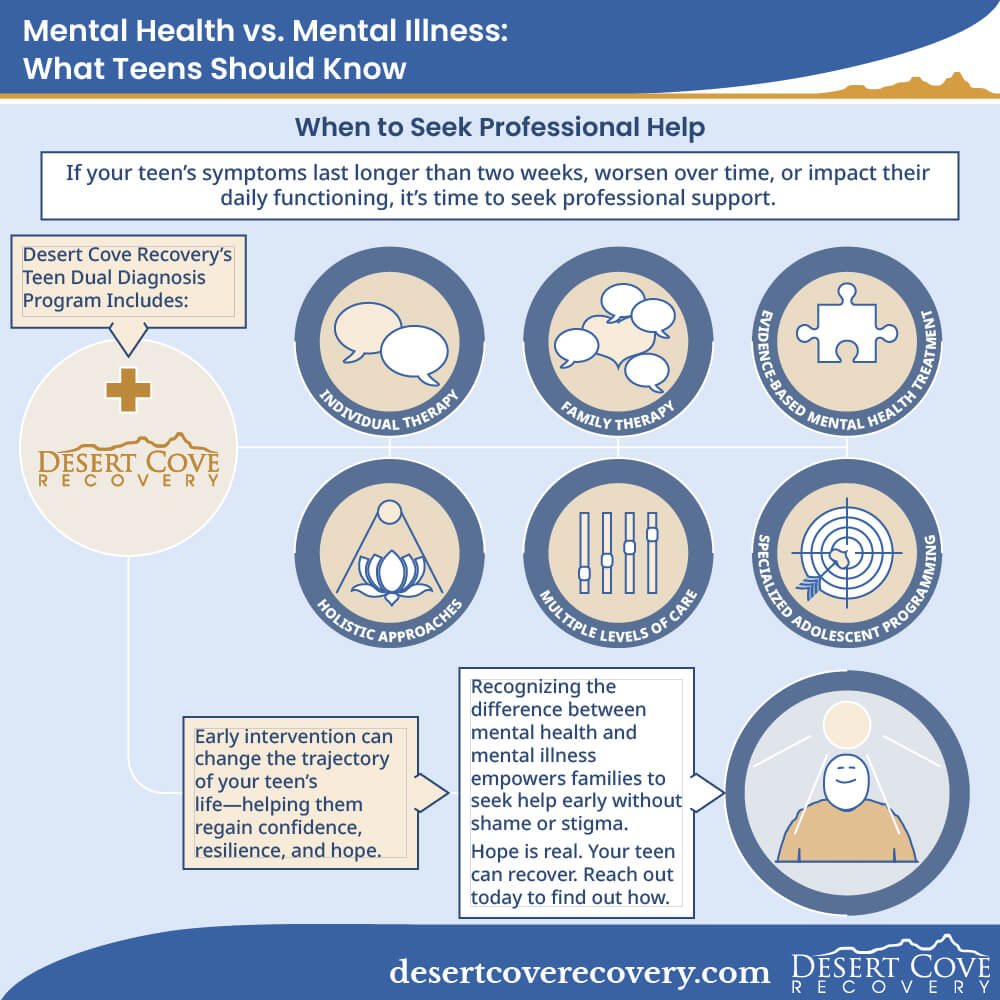
If your teen’s symptoms last longer than two weeks, worsen over time, or impact daily functioning, it’s time to seek professional support.
Desert Cove Recovery’s Teen Dual Diagnosis Program Includes:
- Individual therapy to build self-awareness and coping skills
- Family therapy to strengthen communication and rebuild trust
- Evidence-based mental health treatment, including CBT and trauma-informed care
- Holistic approaches blending mindfulness, nutrition, and 12-Step principles
- Multiple levels of care, from residential treatment to intensive outpatient programs
- Specialized adolescent programming tailored to developmental needs
Early intervention can change the trajectory of your teen’s life—helping them regain confidence, resilience, and hope.
Finding Hope and Healing at Desert Cove Recovery
Recognizing the difference between mental health challenges and mental illness empowers families to seek help early without shame or stigma.
At Desert Cove Recovery, we provide compassionate, integrated care that addresses emotional and behavioral health holistically.
Teens can and do recover—with the right guidance, support, and environment.
If your teenager is struggling with mental health concerns, substance use, or both, our experienced clinical team is here to help your family find a path toward healing.
Start Your Teen’s Recovery Journey Today
Hope is real, and recovery is possible.
Desert Cove Recovery’s Scottsdale teen program is designed to promote emotional wellness, restore balance, and help families heal together.
Contact Desert Cove Recovery today to learn more about our specialized treatment programs for teens and families.
Together, we can help your teen build a happy, healthy, and substance-free future.
Sources:
[1] https://www.nimh.nih.gov/health/topics/child-and-adolescent-mental-health