When Sarah sought treatment for alcohol use disorder, she couldn’t understand why she kept relapsing. Her anxiety attacks had intensified, sleep was nearly impossible, and the crushing weight of depression made each day harder than the last. What Sarah didn’t know was that she was battling two interconnected conditions, not just one. She had co-occurring disorders, also known as dual diagnosis. Treating only her alcohol use while ignoring her mental health meant she could never fully heal.
If you or someone you love struggles with both substance use and mental health challenges, understanding co-occurring disorders is the first step toward lasting recovery.
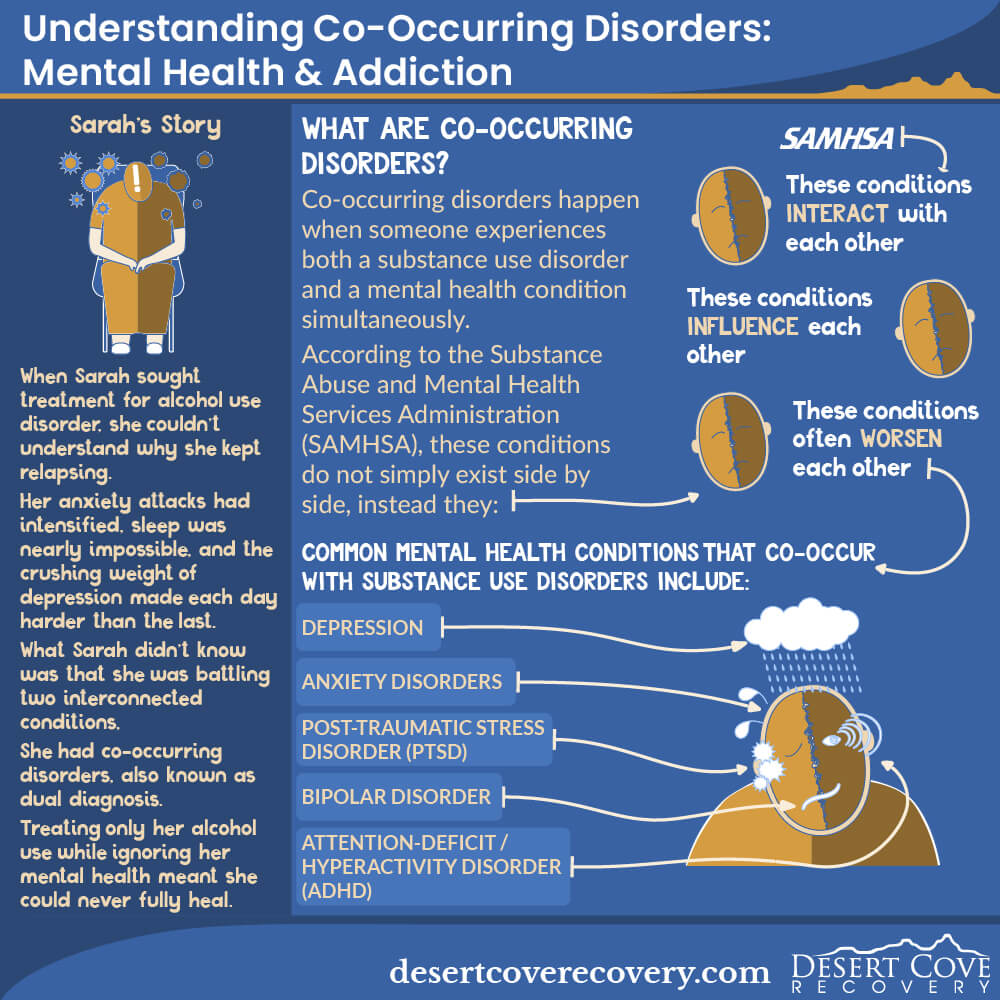
Co-occurring disorders happen when someone experiences both a substance use disorder and a mental health condition simultaneously. According to the Substance Abuse and Mental Health Services Administration (SAMHSA), these conditions do not just exist side by side. They interact, influence, and often worsen each other.
Common mental health conditions that co-occur with substance use disorders include:
- Depression
- Anxiety disorders
- Post-traumatic stress disorder (PTSD)
- Bipolar disorder
- Attention-deficit/hyperactivity disorder (ADHD)
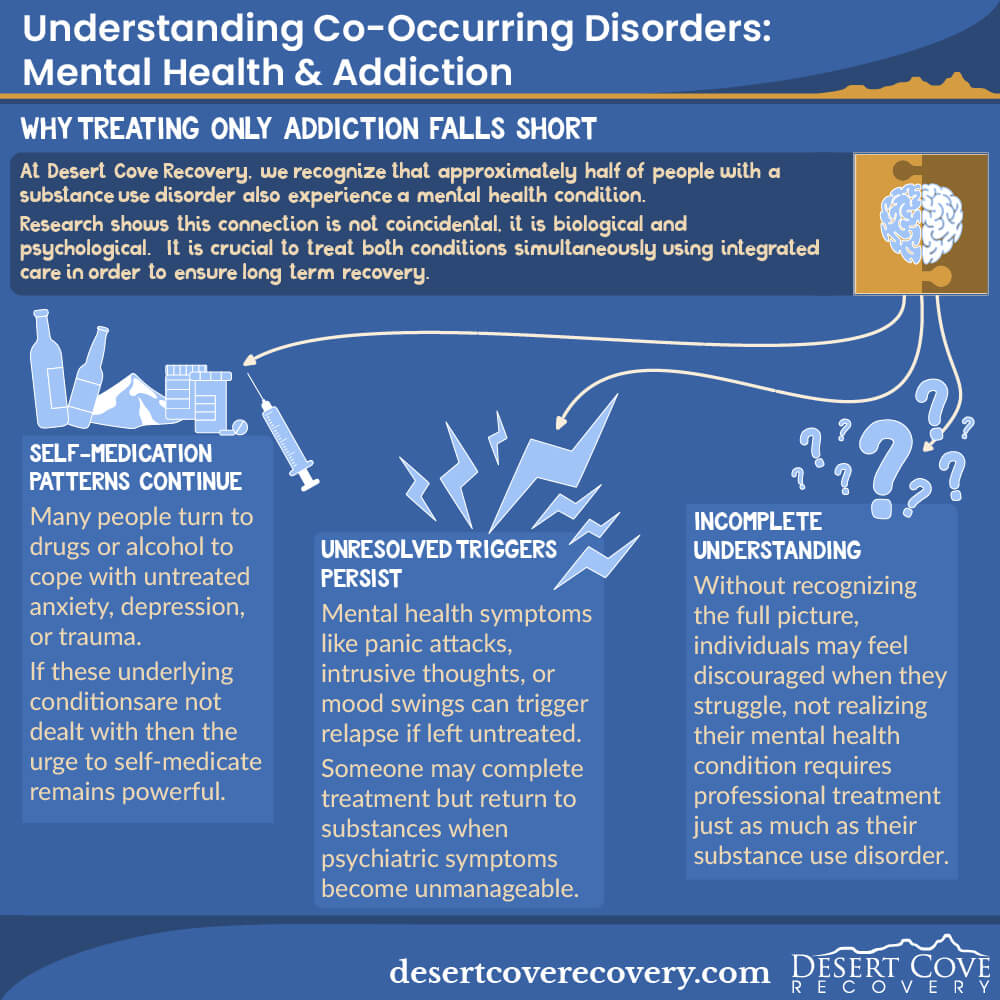
At Desert Cove Recovery, we recognize that approximately half of people with a substance use disorder also experience a mental health condition. Research shows this connection is not coincidental. It is biological and psychological and requires integrated care.
Why Treating Only Addiction Falls Short
Imagine trying to heal a broken leg while ignoring a severe infection in the same limb. Traditional addiction treatment that overlooks co-occurring mental health conditions often falls short for similar reasons.
- Self-medication patterns continue: Many individuals initially turn to drugs or alcohol to cope with untreated anxiety, depression, or trauma. Without addressing these underlying conditions, the urge to self-medicate remains powerful.
- Unresolved triggers persist: Mental health symptoms like panic attacks, intrusive thoughts, or mood swings can trigger relapse if left untreated. Someone may complete treatment but return to substances when psychiatric symptoms become unmanageable.
- Incomplete understanding: Without recognizing the full picture, individuals may feel discouraged when they struggle, not realizing their mental health condition requires professional treatment just as much as their substance use disorder.
The Impact of Integrated Care on Recovery

Integrated treatment addresses both mental health and substance use simultaneously, dramatically improving recovery outcomes.
- Comprehensive treatment plans: At our Arizona rehab centers, we create custom addiction treatment plans that address the whole person. Our holistic approach integrates evidence-based therapies with cutting-edge techniques, ensuring both conditions receive expert attention.
- Coordinated care: Rather than navigating between separate providers, integrated dual diagnosis treatment utilizes one compassionate team to coordinate all aspects of care. This eliminates conflicting approaches and ensures everyone works toward the same healing goals.
- Medication management: Some co-occurring disorders benefit from medications for mental health conditions alongside treatment for substance use. Integrated care allows for careful, personalized coordination of all prescriptions.
- Skill development: Integrated treatment teaches coping skills that address both conditions, from managing cravings while handling anxiety to processing trauma while maintaining sobriety.
Recognizing the Signs
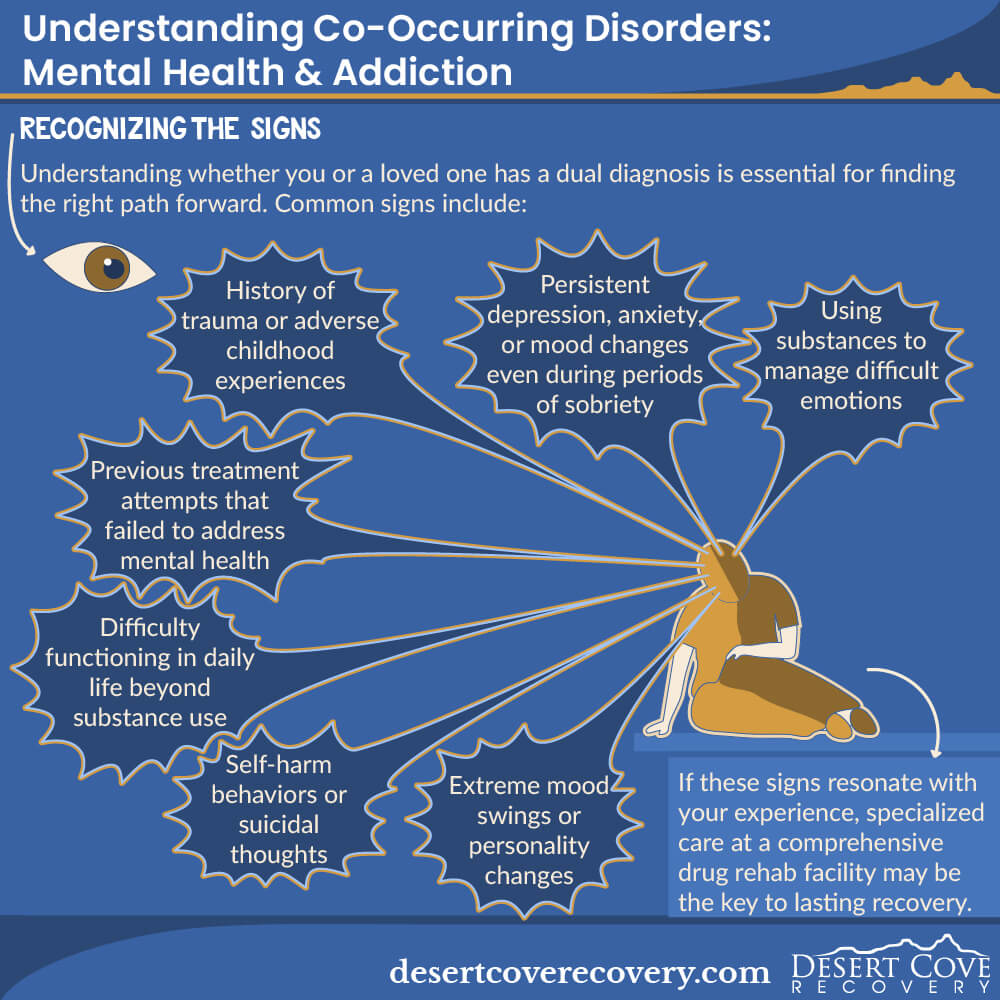
Understanding whether you or a loved one has a dual diagnosis is essential for finding the right path forward. Common signs include:
- Using substances to manage difficult emotions
- Persistent depression, anxiety, or mood changes even during periods of sobriety
- History of trauma or adverse childhood experiences
- Previous treatment attempts that failed to address mental health
- Difficulty functioning in daily life beyond substance use
- Self-harm behaviors or suicidal thoughts
- Extreme mood swings or personality changes
If these signs resonate with your experience, specialized care at a comprehensive drug rehab Arizona facility may be the key to lasting recovery.
Desert Cove Recovery: Your Partner in Integrated Healing
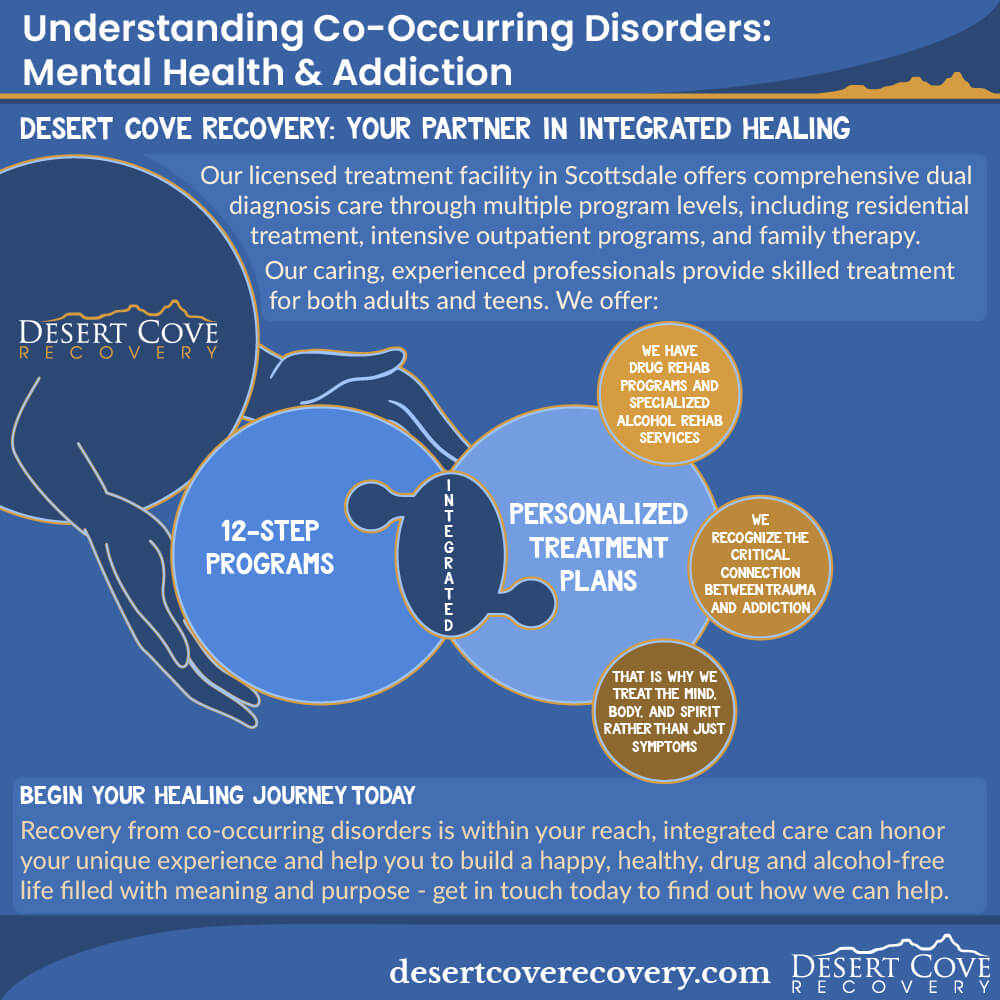
Our licensed treatment facility in Scottsdale offers comprehensive dual diagnosis care through multiple program levels, including residential treatment, intensive outpatient programs, and family therapy. Our caring, highly educated professionals have years of experience treating adults and teens.
We integrate traditional 12-step programs with innovative therapeutic techniques to create personalized treatment plans. From our drug rehab Arizona programs to our specialized alcohol rehab AZ services, every aspect of our curriculum recognizes the critical connection between trauma and addiction to treat the mind, body, and spirit rather than just symptoms.
Begin Your Healing Journey Today
Recovery from co-occurring disorders is not only possible, but it is within your reach. With integrated care that treats the whole person and honors your unique experience, you can build a happy, healthy, drug and alcohol-free life filled with meaning and purpose.
Contact Desert Cove Recovery today to learn more about our dual diagnosis treatment programs at our Arizona rehab centers. Find out how our holistic approach can elevate your life. You do not have to walk this path alone. Our experienced, compassionate team is here to guide you toward lasting healing.
Sources:
[1] https://nida.nih.gov/research-topics/co-occurring-disorders-health-conditions [2] https://pmc.ncbi.nlm.nih.gov/articles/PMC4152944/