When a teenager hears about opioids, they might think of pills prescribed after wisdom teeth removal or a sports injury. What many teens don’t realize is how dramatically these substances affect the developing brain and body—often in ways that can’t be reversed. Understanding these hidden dangers helps you protect your teen and recognize warning signs before experimentation becomes dependency.
How Opioids Change the Teenage Brain
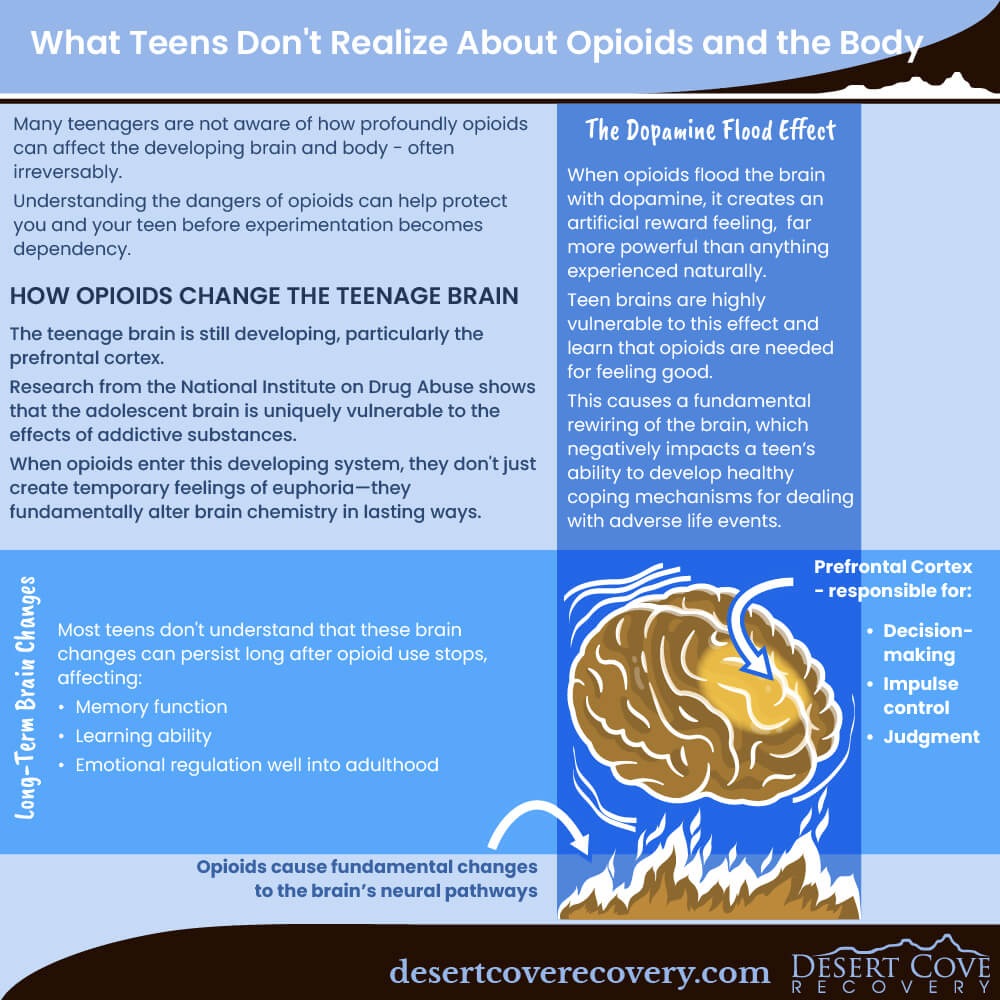
The teenage brain is still developing, particularly the prefrontal cortex responsible for decision-making, impulse control, and judgment. Research from the National Institute on Drug Abuse shows that the adolescent brain is uniquely vulnerable to the effects of addictive substances. When opioids enter this developing system, they don’t just create temporary feelings of euphoria—they fundamentally alter brain chemistry in lasting ways.
The Dopamine Flood Effect
Opioids flood the brain with dopamine, creating an artificial reward response far more powerful than anything experienced naturally. For teens, whose brains are already primed for risk-taking and reward-seeking behaviors, this creates a perfect storm. The brain begins to “learn” that opioids are necessary for feeling good, fundamentally rewiring neural pathways that should be developing healthy coping mechanisms through understanding the brain’s role in recovery.
Long-Term Brain Changes
Most teens don’t understand that these brain changes can persist long after opioid use stops, affecting:
- Memory function
- Learning ability
- Emotional regulation well into adulthood
Physical Effects Teens Often Ignore
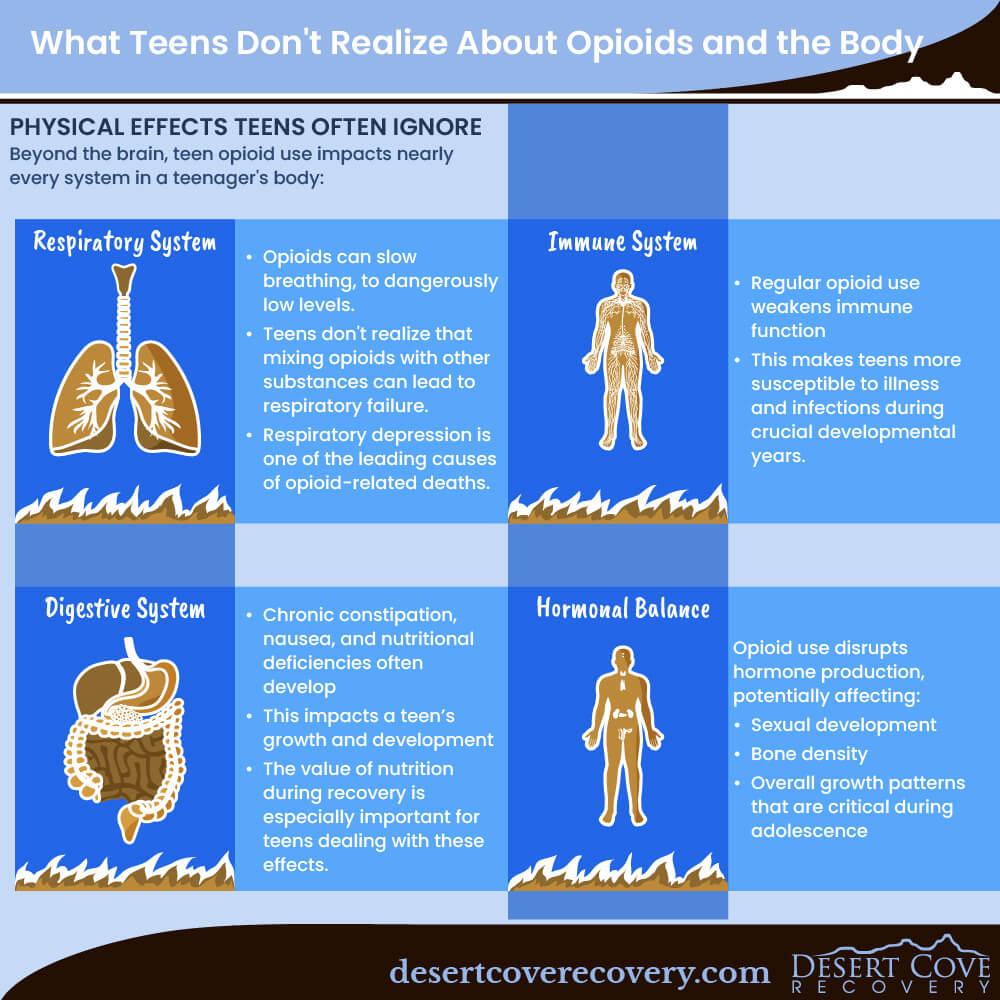
Beyond the brain, teen opioid use impacts nearly every system in a teenager’s body:
Respiratory System
Opioids slow breathing, sometimes to dangerously low levels. Teens don’t realize that mixing opioids with other substances—even over-the-counter medications—can lead to respiratory failure. According to the CDC, respiratory depression is one of the leading causes of opioid-related deaths.
Immune System
Regular opioid use weakens immune function, making teens more susceptible to illness and infections during crucial developmental years.
Digestive System
Chronic constipation, nausea, and nutritional deficiencies often develop, affecting growth and development. Nutrition’s role in supporting recovery becomes especially important for teens dealing with these effects.
Hormonal Balance
Opioid use disrupts hormone production, potentially affecting:
- Sexual development
- Bone density
- Overall growth patterns that are critical during adolescence
The Speed of Dependency in Young People
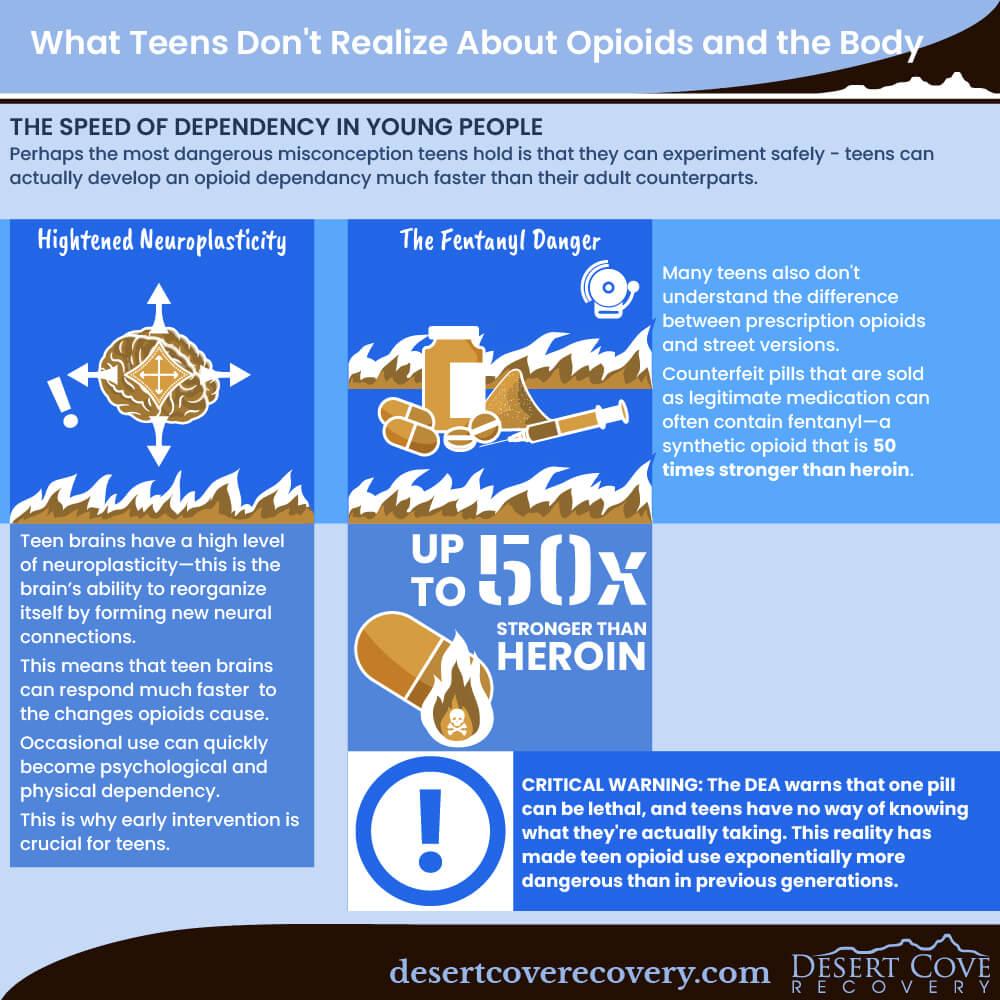
Perhaps the most dangerous misconception teens hold is that they can experiment safely. The reality is that adolescents develop opioid dependency faster than adults due to their brain’s heightened neuroplasticity. What starts as occasional use can quickly become psychological and physical dependency, which is why early intervention matters in teen recovery.
The Fentanyl Danger
Many teens also don’t understand the difference between prescription opioids and street versions. Counterfeit pills sold as legitimate medication often contain fentanyl—a synthetic opioid 50 times stronger than heroin.
Critical Warning: The DEA warns that one pill can be lethal, and teens have no way of knowing what they’re actually taking. This reality has made teen opioid use exponentially more dangerous than in previous generations.
Warning Signs Parents Should Recognize
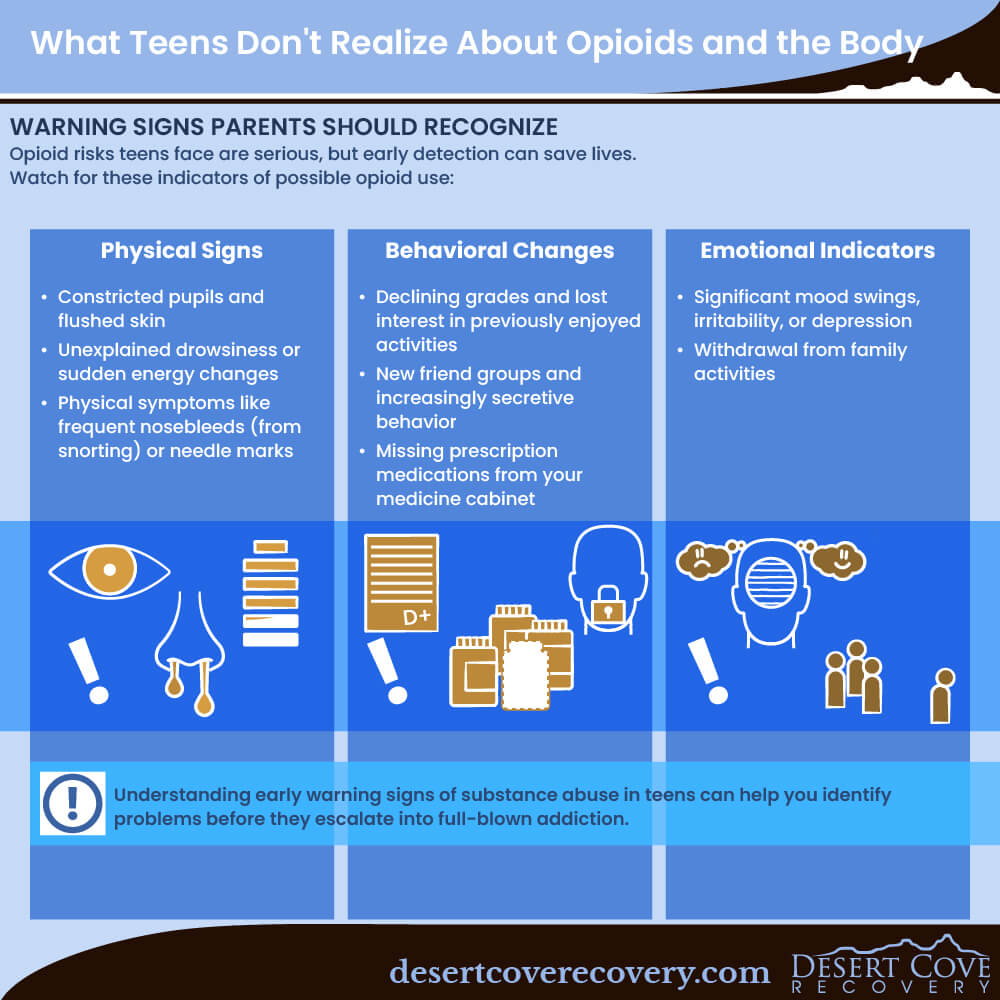
Opioid risks teens face are serious, but early detection can save lives. Watch for these indicators of possible opioid use:
Physical Signs
- Constricted pupils and flushed skin
- Unexplained drowsiness or sudden energy changes
- Physical symptoms like frequent nosebleeds (from snorting) or needle marks
Behavioral Changes
- Declining grades and lost interest in previously enjoyed activities
- New friend groups and increasingly secretive behavior
- Missing prescription medications from your medicine cabinet
Emotional Indicators
- Significant mood swings, irritability, or depression
- Withdrawal from family activities
Understanding early warning signs of substance abuse in teens can help you identify problems before they escalate into full-blown addiction.
Professional Help Makes the Difference
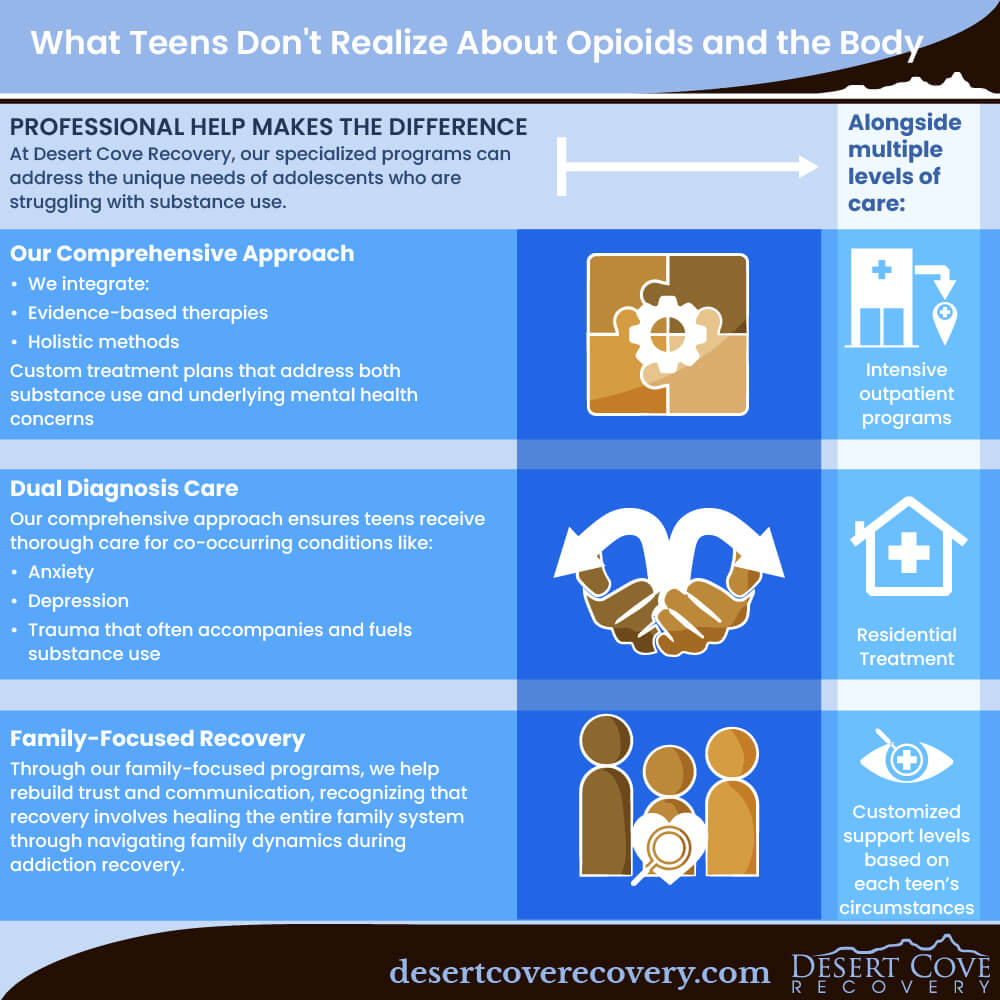
At Desert Cove Recovery, our specialized Arizona rehab programs address the unique needs of adolescents struggling with substance use. Our caring, highly educated professionals—with years of experience in adolescent treatment—understand that teen opioid use requires specialized approaches that differ fundamentally from adult treatment.
Our Comprehensive Approach
We integrate:
- Evidence-based therapies
- Holistic methods
- Custom treatment plans that address both substance use and underlying mental health concerns
Dual Diagnosis Care
Our comprehensive approach ensures teens receive thorough care for co-occurring conditions like:
- Anxiety
- Depression
- Trauma that often accompanies and fuels substance use
Family-Focused Recovery
Through our family-focused programs, we help rebuild trust and communication, recognizing that recovery involves healing the entire family system through navigating family dynamics during addiction recovery.
As one of Arizona’s premier treatment centers, we offer multiple levels of care:
- Intensive outpatient programs
- Residential treatment
- Customized support levels for each teen’s unique situation
Take Action Today
If you’re concerned about your teen’s relationship with opioids, waiting only allows the problem to deepen. Desert Cove Recovery offers compassionate, specialized care for Arizona teens and their families, providing the expertise and support needed for lasting transformation.
Contact us today to learn more about our comprehensive programs that focus on what rehab looks like for teens.
Sources:
[1] https://nida.nih.gov/publications/drugs-brains-behavior-science-addiction/drug-misuse-addiction
[2] https://www.cdc.gov/overdose-prevention/index.html
[3] https://www.dea.gov/onepill