Table of Contents
Holistic Addiction Treatment Center in Scottsdale, Arizona
At Desert Cove Recovery, our Holistic Addiction Treatment Center in Scottsdale, Arizona, redefines recovery by integrating mind, body, and spirit amid the serene desert landscape. Unlike traditional methods focused solely on symptoms, we address root causes for lasting healing. This whole-person approach fosters sustainable freedom from substance use disorders. Our licensed clinical team creates individualized plans that combine assessment and compassionate support to meet each person’s recovery needs today.
We offer proven modalities such as yoga, acupuncture, nutritional counseling, and mindfulness meditation, complementing evidence-based therapies. Our Holistic Treatment Center provides access to Scottsdale’s nature trails for grounding walks, luxury amenities for comfort, and private spaces for introspection. These elements, aligned with Substance Abuse and Mental Health Services Administration (SAMHSA) guidelines on integrative behavioral health, enhance treatment efficacy. Therapies are tailored, offered in individual and group formats, and coordinated with medical care for progress.
Holistic addiction treatment yields key benefits, including reduced relapse rates by nurturing emotional, physical, and spiritual needs. Patients in our holistic treatment for drug addiction programs report deeper self-awareness and resilience. Scottsdale’s tranquil setting amplifies these outcomes, supporting integrative addiction recovery. We involve family when appropriate to strengthen recovery support systems.
Explore our yoga and nutrition therapies next.
Fundamentals of Holistic Addiction Treatment
Building on understanding addiction’s complex nature, holistic addiction treatment offers a comprehensive path to recovery at centers like a Holistic Addiction Treatment Center. We at Desert Cove Recovery integrate this approach, addressing the physical, emotional, mental, and spiritual aspects of addiction simultaneously. Unlike fragmented methods, holistic addiction treatment views individuals as whole beings, fostering lasting change through interconnected healing.
Key components form the foundation of holistic addiction treatment. These include:
- Nutrition and balanced diets to restore bodily health and stabilize mood.
- Exercise programs tailored to build strength and reduce stress.
- Mindfulness practices like meditation to manage cravings and enhance self-awareness.
- Acupuncture and yoga for alleviating withdrawal symptoms and promoting relaxation.
- Complementary therapies alongside evidence-based ones such as CBT and DBT.
The National Center for Complementary and Integrative Health (NCCIH), an authoritative evidence-based review from the NIH research center, supports these mind-body practices. For instance, NCCIH summaries highlight yoga’s positive results in reducing anxiety and substance use, while mindfulness meditation aids in lowering relapse risks when combined with standard treatments. Acupuncture shows limited evidence for easing cravings, underscoring the value of integrated holistic addiction care.
Holistic methods promote long-term recovery via extended, individualized care plans that adapt to each person’s needs. This patient-centered empathy empowers clients, instilling hope in a safe, therapeutic, and nurturing environment.
To illustrate key differences, consider the following table titled Holistic vs. Traditional Addiction Treatment Approaches. It compares core aspects, drawing on data from NCCIH on mind-body practices and SAMHSA treatment guidelines.
| Aspect | Holistic Treatment | Traditional Treatment |
|---|---|---|
| Focus | Whole person: body, mind, spirit | Primarily physical detoxification and symptoms |
| Therapies | Yoga, meditation, nutrition alongside CBT/DBT | Primarily medication and talk therapy |
| Duration | Extended, individualized care | Often short-term |
This comparison reveals how holistic treatment for drug addiction expands beyond symptoms to nurture comprehensive recovery. Traditional approaches excel in acute detox but often overlook spiritual and emotional dimensions, leading to higher relapse rates. In contrast, our extended care at Desert Cove Recovery builds resilience through sustained support, aligning with NCCIH’s call for adjunctive therapies that enhance outcomes.
These distinctions matter for those seeking deeper healing. Facilities embracing holistic principles, like a Holistic Addiction Treatment Center, prioritize individualized plans that integrate evidence-based and complementary modalities. Clients benefit from reduced cravings and improved abstinence, as NCCIH trials indicate with yoga yielding 37% greater odds of success.
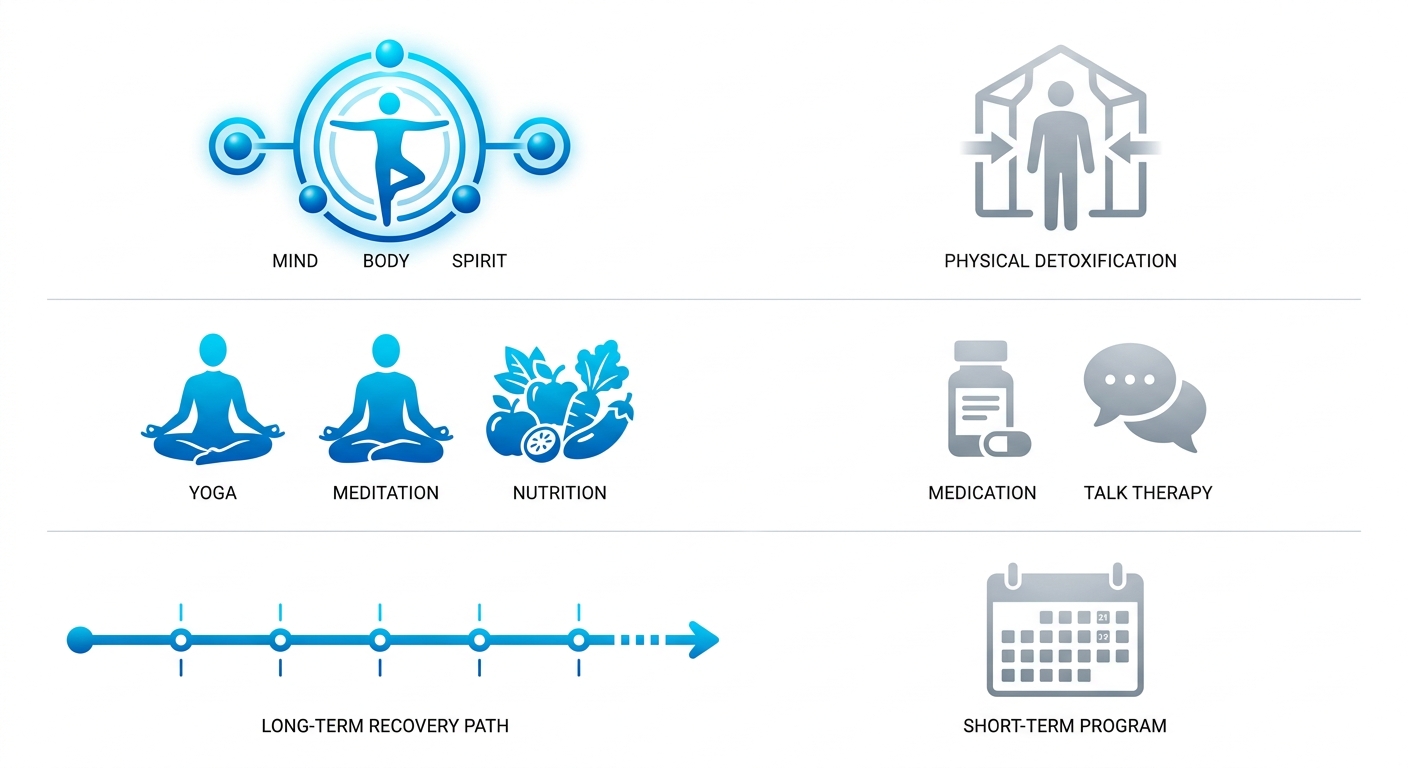
Holistic vs. traditional addiction treatment comparison infographic
Visualizing these approaches underscores their synergy in practice. At Desert Cove Recovery in Scottsdale, AZ, we weave these fundamentals into daily care, paving the way for specific therapies explored next. Your new life awaits through this integrated path.
Therapies Used in Holistic Addiction Treatment Centers
Building on the holistic addiction philosophy, treatment centers employ diverse therapies to support lasting recovery. At a Holistic Addiction Treatment Center like Desert Cove Recovery in Scottsdale, AZ, we integrate evidence-based practices with complementary approaches for comprehensive healing.
Evidence-Based and Holistic Therapy Integration
At Desert Cove Recovery, we seamlessly blend cognitive behavioral therapy (CBT) and dialectical behavior therapy (DBT) with holistic methods such as yoga and art therapy. This integration aligns with the center’s holistic addiction philosophy, enhancing emotional regulation and reducing stress. CBT helps patients identify and change negative thought patterns linked to addiction, while DBT builds skills for managing intense emotions and interpersonal challenges. Yoga promotes physical flexibility and mental calm, complementing these therapies by lowering cortisol levels and fostering mindfulness.
Art therapy, as peer-reviewed evidence from PubMed Central shows, is offered in 36.8% of U.S. substance abuse programs and proves effective for women and adolescents, aiding emotional expression when words fail. According to this government biomedical archive, programs using motivational enhancement therapy alongside art therapy see improved outcomes. In our holistic addiction treatment, patients create artwork to process trauma, boosting self-awareness and resilience. This combination not only addresses core addiction drivers but also nurtures creativity, leading to sustained sobriety. We witness patients gaining tools for daily life through these synergistic practices, embodying hope in recovery.
Mind-Body Practices for Recovery
Mind-body practices form a cornerstone of recovery at Desert Cove Recovery. Meditation cultivates mindfulness, helping individuals observe cravings without acting on them, thus lowering relapse risk. The National Center for Complementary and Integrative Health (NCCIH), in its authoritative government research digest, notes mindfulness meditation reduces substance use when paired with standard treatments, with studies like a 2024 trial showing decreased drug use in methadone programs.
Nutritional counseling supports detoxification by replenishing vital nutrients depleted during addiction, stabilizing mood and energy. Proper nutrition aids neurotransmitter balance, crucial for mental clarity. NCCIH highlights yoga’s role in reducing anxiety and substance use, with a 2019 study indicating 37% greater abstinence odds. These practices, integrated into our programs, empower patients to reconnect body and mind.
Programs requiring 12-step meetings, per PubMed Central data, often incorporate such therapies, enhancing motivation. At our center, daily sessions build resilience, fostering a therapeutic environment where healing thrives.
The following table compares key holistic therapies:
| Therapy | Focus Area | Benefits in Recovery |
|---|---|---|
| Yoga | Physical and emotional balance | Reduces stress, improves flexibility |
| Meditation | Mindfulness and emotional regulation | Lowers relapse risk |
| Nutritional Counseling | Body nourishment | Supports detox and energy |
Supporting data from NCCIH research on yoga/meditation and PMC article evidence underscore their efficacy.
These therapies address multifaceted recovery needs, with yoga enhancing physical health while meditation targets mental patterns. PubMed Central research indicates complementary therapies like art boost program engagement, particularly for diverse patient groups. Transitioning to individualized care, such integration sets the stage for personalized success at centers like ours.
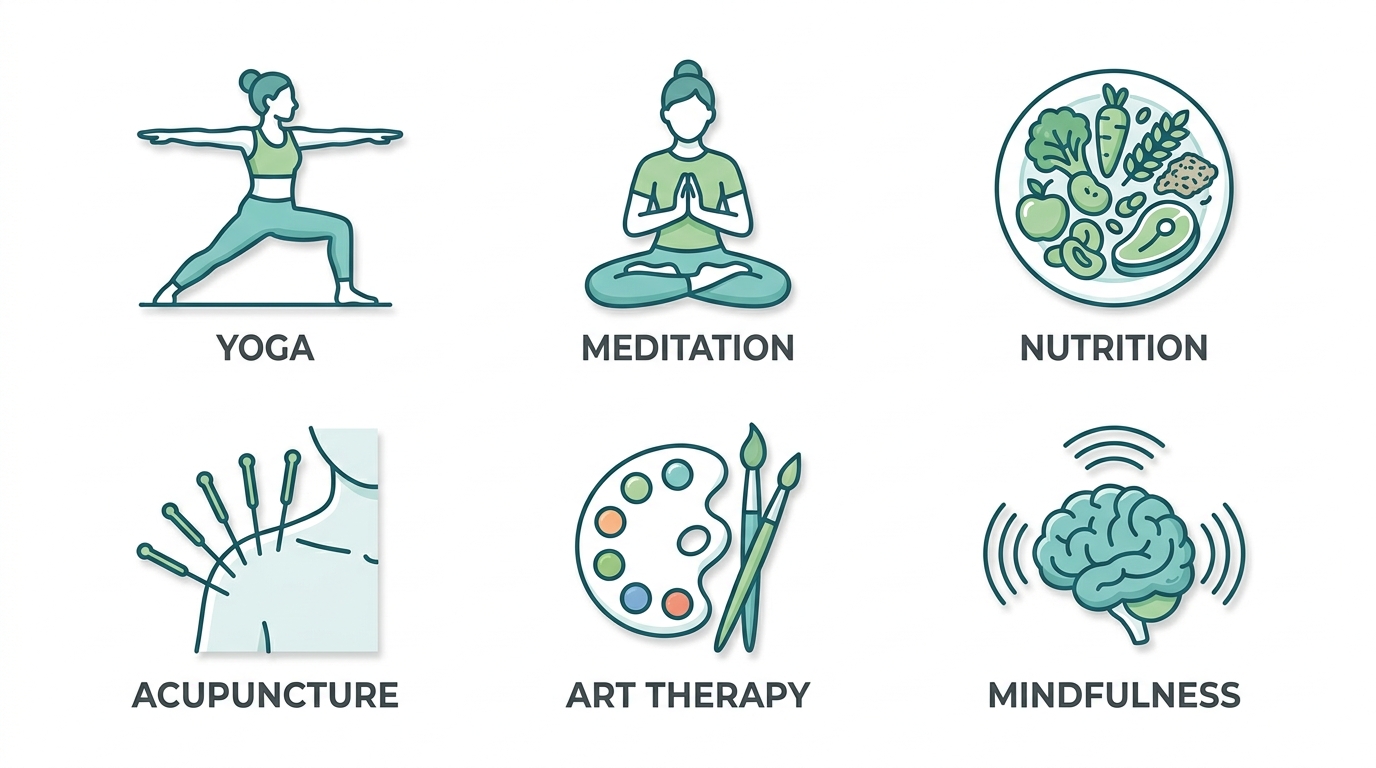
Icons of key holistic therapies in addiction recovery programs
Visual representations like these icons highlight the variety of tools available, making abstract concepts tangible for patients embarking on recovery.
Customized Treatment Plans
Individualized assessments at Desert Cove Recovery drive our holistic treatment for drug addiction. Upon admission, our licensed therapists conduct comprehensive evaluations, considering medical history, addiction severity, and co-occurring disorders. This process informs tailored programs blending conventional therapies like CBT with complementary ones such as yoga, meditation, and nutritional support.
PubMed Central evidence supports integrating these for enhanced efficacy, noting organizational factors like patient demographics influence therapy adoption. NCCIH affirms mind-body approaches aid emotional regulation and relapse prevention. We craft plans with extended residential care, IOP, and family therapy, ensuring alignment with each person’s needs.
For teens and adults, customization includes teen-specific programs and dual-diagnosis focus. This client-centered approach, in our nurturing Scottsdale facility, promotes engagement and long-term adherence. Patients receive ongoing adjustments, maximizing outcomes in comprehensive holistic addiction care.
These tailored therapies contribute to long-term recovery success, bridging to positive outcomes in subsequent program phases.
Applying Holistic Methods in Addiction Recovery
Benefits for Substance Use Disorders
Building on holistic principles, we at Desert Cove Recovery integrate holistic addiction treatment into comprehensive care at our Holistic Addiction Treatment Center in Scottsdale, AZ. This approach addresses substance use disorders by fostering relapse prevention and enhancing overall wellness. According to the Substance Abuse and Mental Health Services Administration (SAMHSA), authoritative government health data on recovery frameworks highlights how mindfulness practices reduce cravings, empowering individuals to manage triggers effectively. Emotional regulation techniques further strengthen sobriety, helping patients build resilience against relapse.
Holistic methods also promote physical and emotional wellness through targeted wellness practices. Nutrition supports detox processes, replenishing the body with essential nutrients depleted by addiction. Yoga improves flexibility, reduces stress, and eases physical tension, contributing to sustained recovery. SAMHSA recovery models endorse these evidence-based holistic approaches, showing improved outcomes in substance abuse treatment when integrated with traditional therapies. Patients experience not just symptom relief but a renewed sense of balance and vitality.
The following table outlines key benefits of holistic treatment across addiction types, drawing from SAMHSA recovery models and NCCIH insights on holistic benefits:
| Benefit | Drug Addiction | Alcohol Addiction |
|---|---|---|
| Relapse Prevention | Mindfulness reduces cravings | Emotional regulation aids sobriety |
| Physical Recovery | Nutrition supports detox | Yoga eases withdrawal |
This comparison illustrates tailored applications, where mindfulness proves vital for drug addiction holistic treatment, while emotional tools suit alcohol recovery. These strategies enhance long-term success, as supported by government health data.
Programs for Drug and Alcohol Addiction
Our programs at Desert Cove Recovery embody holistic addiction treatment, blending evidence-based care with wellness modalities for drug and alcohol addiction. Aligned with our recovery philosophy, we offer flexible options tailored to individual needs. Intensive Outpatient Programs (IOP) provide structured support for those transitioning from higher care levels, incorporating group therapy, mindfulness, and nutritional counseling several days weekly.
- Partial Hospitalization Programs (PHP) deliver intensive daily sessions, ideal for stabilizing patients with holistic treatment for drug addiction, including yoga and meditation to manage withdrawal.
- Residential treatment offers immersive 24/7 care in our therapeutic Scottsdale environment, integrating 12-Step principles with holistic practices for comprehensive healing.
These programs, available at holistic addiction treatment centers like ours, ensure seamless progression from detox referrals to outpatient support. SAMHSA emphasizes such integrated frameworks for effective substance use recovery, promoting sustained sobriety through whole-person care.
Family and Dual-Diagnosis Support
Holistic recovery extends to families and those with co-occurring disorders, recognizing addiction’s relational impact. We provide holistic addiction treatment through integrated dual-diagnosis care, addressing mental health alongside substance use. Licensed therapists conduct assessments to create customized plans, combining cognitive behavioral therapy with meditation for anxiety or trauma.
Family therapy sessions foster healing dynamics, teaching communication skills and boundaries. These weekly meetings help loved ones understand addiction’s roots, reducing enabling patterns and building support networks. For dual-diagnosis patients, our approach treats depression or PTSD concurrently, using yoga and art therapy for emotional regulation.
- Multidisciplinary teams, including medical staff, ensure safe medication management.
- Ongoing family education equips participants for post-treatment success.
Substance Abuse and Mental Health Services Administration data underscores the value of such integrated care in recovery frameworks. These programs at Desert Cove Recovery embody hope, inviting you to start your journey–contact us today for personalized support. Your new life awaits in our safe, therapeutic environment.
Advanced Strategies in Holistic Addiction Care
Building on foundational approaches, advanced strategies in a Holistic Addiction Treatment Center elevate holistic addiction treatment by integrating evidence-based complementary therapies. We at Desert Cove Recovery in Scottsdale, Arizona, emphasize modalities like meditation and yoga for craving management, alongside nutrition and cognitive behavioral therapy (CBT) integration. These methods address both substance use and co-occurring mental health issues, fostering comprehensive recovery.
Peer-reviewed research from the National Center for Biotechnology Information (NCBI) highlights meditation and yoga as high-effectiveness options for opioid addiction, particularly in reducing cravings. NCBI studies on complementary therapies show these practices enhance traditional treatments, improving patient engagement and outcomes. For general drug addictions, nutrition paired with CBT proves effective for dual-diagnosis cases, supporting emotional regulation and physical restoration.
In regional settings like an Alcohol Treatment Center Arizona, we implement these strategies through tailored programs. Patients receive individualized plans combining holistic treatment for drug addiction with conventional care, such as 12-Step principles and outpatient support. This integration promotes sustained sobriety in a safe, therapeutic environment.
Effectiveness of Holistic Approaches for Specific Addictions
Compare efficacy indicators.
| Addiction Type | Holistic Effectiveness | Key Modality |
|---|---|---|
| Opioid | High for craving reduction | Meditation/Yoga |
| Drug (General) | Effective for dual-diagnosis | Nutrition/CBT integration |
Supported by PMC studies and NCCIH data, this comparison reveals meditation and yoga excel for opioids, while nutrition and CBT integration aids complex drug cases. These insights guide treatment selection, maximizing benefits.
Implementing these requires professional oversight to ensure safety and personalization. While promising, limitations exist, such as varying individual responses, underscoring the need for customized applications. At our center, we monitor outcomes closely, blending modalities with evidence-based practices for optimal results. These strategies pave the way for sustained recovery in specialized centers.
Frequently Asked Questions on Holistic Treatment
What is holistic addiction treatment?
Holistic addiction treatment addresses mind, body, and spirit through therapies like yoga, nutrition, and acupuncture in addiction recovery. You will experience whole-person care.
What are the benefits of a holistic addiction treatment center?
Benefits include reduced relapse rates, improved emotional regulation, enhanced physical health, and sustained recovery outcomes in holistic treatment for drug addiction.
What therapies are included in holistic treatment for drug addiction?
Key modalities feature meditation, art therapy, equine therapy, and nutritional counseling, fostering balance and healing in integrative holistic rehab programs.
Is holistic treatment effective according to experts?
Yes, Substance Abuse and Mental Health Services Administration (SAMHSA) endorses complementary therapies like mindfulness in substance use disorder treatment as authoritative U.S. government recommendations.
How does holistic treatment apply to alcohol rehab?
Holistic methods suit alcohol and drug addiction. Our alcohol rehab scottsdale incorporates yoga and art therapy for tailored whole-person addiction care in Scottsdale.
How can I start holistic addiction treatment at Desert Cove Recovery?
Contact Desert Cove Recovery today for assessment. We create personalized plans in our Scottsdale facility. Your new life awaits.
Ready for holistic addiction treatment? Contact us today.
Start Your Holistic Recovery Journey Today
Building on our comprehensive mind-body approach, today is the day to reclaim your life from addiction at a premier Holistic Addiction Treatment Center. At Desert Cove Recovery in Scottsdale, AZ, holistic addiction treatment blends therapy, nutrition, mindfulness, and medical detox tailored for drug addiction recovery.
Don’t wait–your recovery starts now. Call our 24/7 admissions line or fill out the online form today for holistic treatment for drug addiction. Your new life awaits. Join countless others who started their sobriety journey here and never looked back. Discover the first steps in our program below.
This article was researched and written with the assistance of AI tools.
Resources
Access SAMHSA Helplines and Resources for Substance Abuse Recovery
Explore Art and Music Therapy Use in U.S. Addiction Programs