
Loneliness can be a major challenge during addiction recovery. After detox and rehab, many individuals face isolation due to a loss of old social connections and the struggle to adjust to a new life without substances. At Desert Cove Recovery, we understand that loneliness can trigger emotional distress and increase the risk of relapse. In this blog, we explore strategies to manage loneliness in recovery and stay connected to support systems, ultimately ensuring long-term sobriety.
The Impact of Loneliness on Recovery
Loneliness during addiction recovery can feel overwhelming and lead to negative emotions like anxiety, depression, and stress. These emotions can amplify cravings and potentially cause relapse. Emotional well-being plays a crucial role in sustaining recovery, and loneliness can undermine this aspect. Addressing feelings of isolation early in the recovery process is vital to prevent setbacks and promote lasting sobriety.

Building a Supportive Network
One of the most important steps in overcoming loneliness is creating a strong support network. This network may include:
- Family and Friends: Rebuilding relationships with loved ones who support your recovery can help reduce feelings of isolation.
- Support Groups: Programs such as 12-Step groups or peer support meetings provide a safe space to share experiences and connect with others who are on a similar journey.
- Therapists and Counselors: Professional support helps you manage emotions and gain practical tools for staying sober.
The more connected you feel to others, the less likely loneliness will lead to relapse.
Engaging in Sober Activities
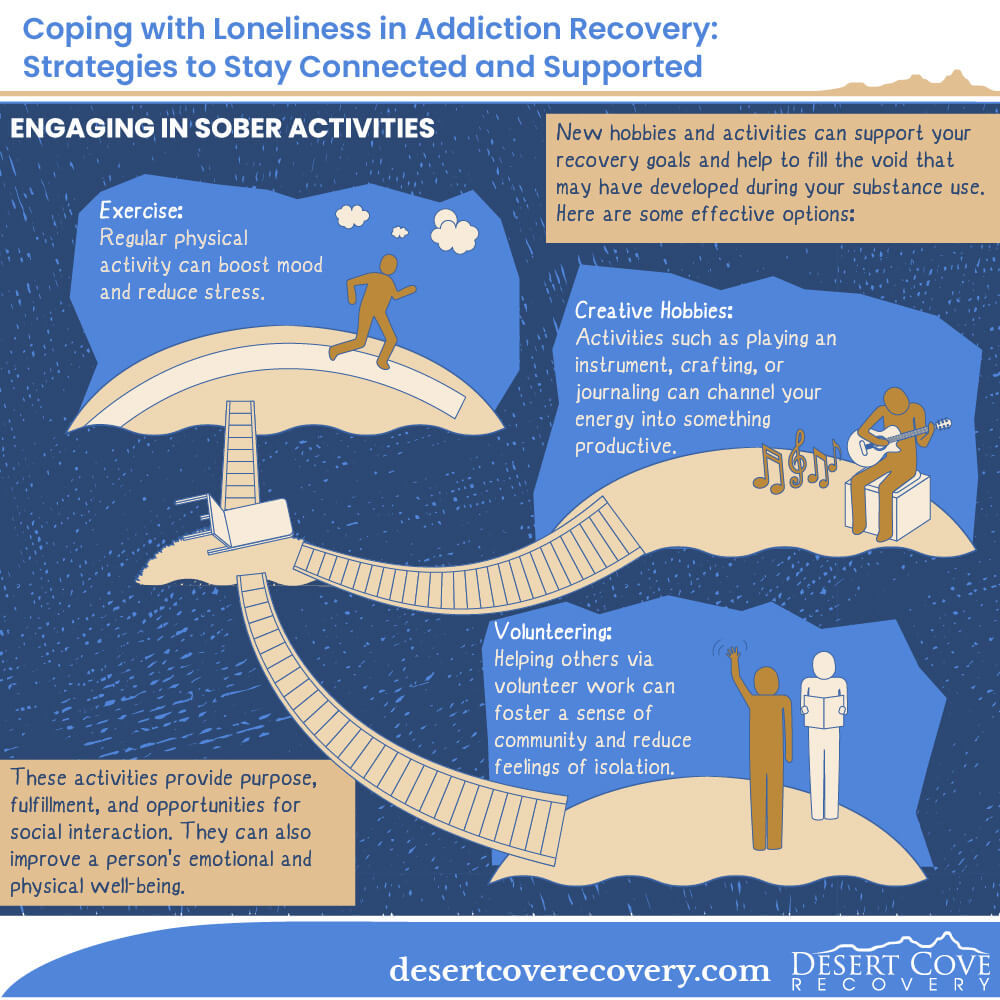
Finding new hobbies or activities that align with your recovery goals can help fill the void created by substance use. Engaging in sober activities can provide purpose, fulfillment, and social interaction. Consider the following:
- Exercise: Regular physical activity can boost mood and reduce stress.
- Creative Hobbies: Engage in activities such as playing an instrument, crafting, or journaling to channel your energy into something productive.
- Volunteering: Helping others through volunteer work can foster a sense of community and reduce feelings of isolation.
These activities not only help combat loneliness but also promote emotional and physical well-being.
Digital Support Networks
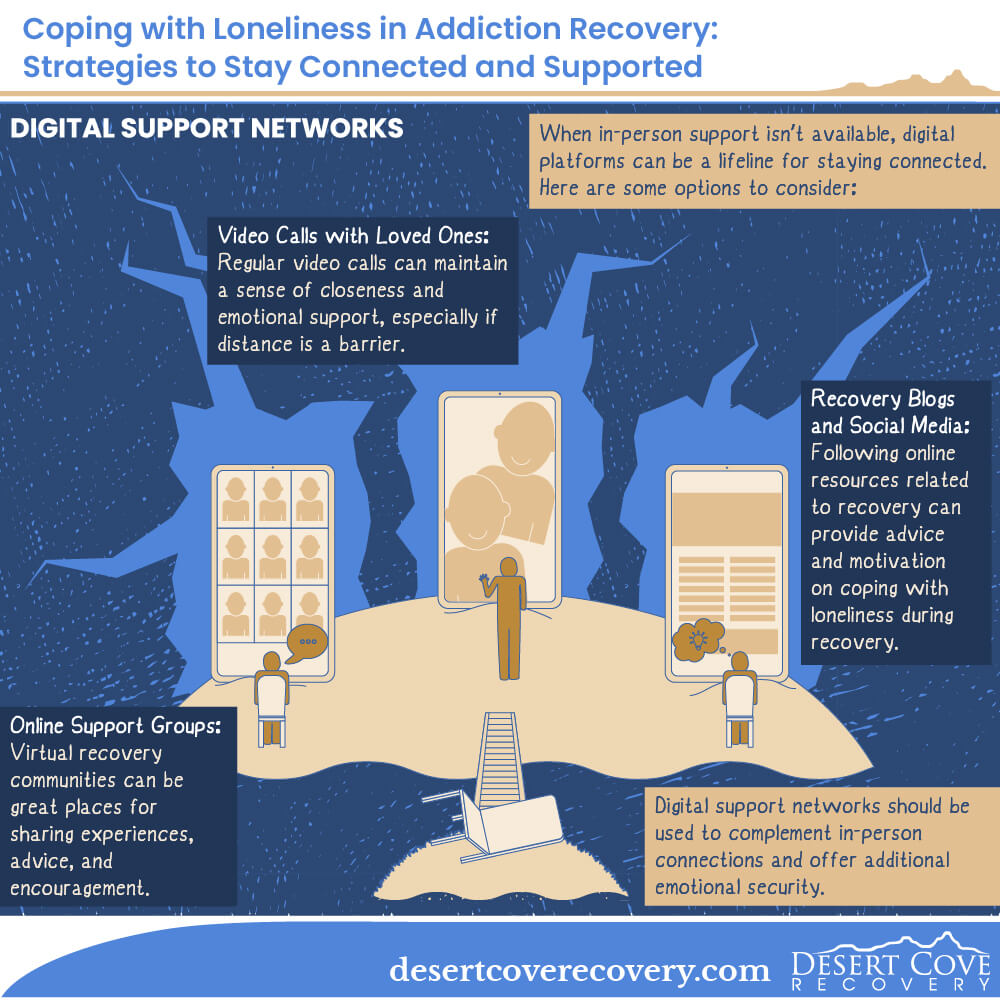
If in-person support isn’t always available, digital platforms can be a lifeline for staying connected. Consider:
- Online Support Groups: Many people find comfort in virtual recovery communities where they can share experiences, advice, and encouragement.
- Video Calls with Loved Ones: Regular video calls can maintain a sense of closeness and emotional support, especially if distance is a barrier.
- Recovery Blogs and Social Media: Following online resources related to recovery can provide motivation and offer advice on managing loneliness during this time.
Digital support networks can complement your in-person connections and offer additional emotional security.
Establishing Healthy Routines
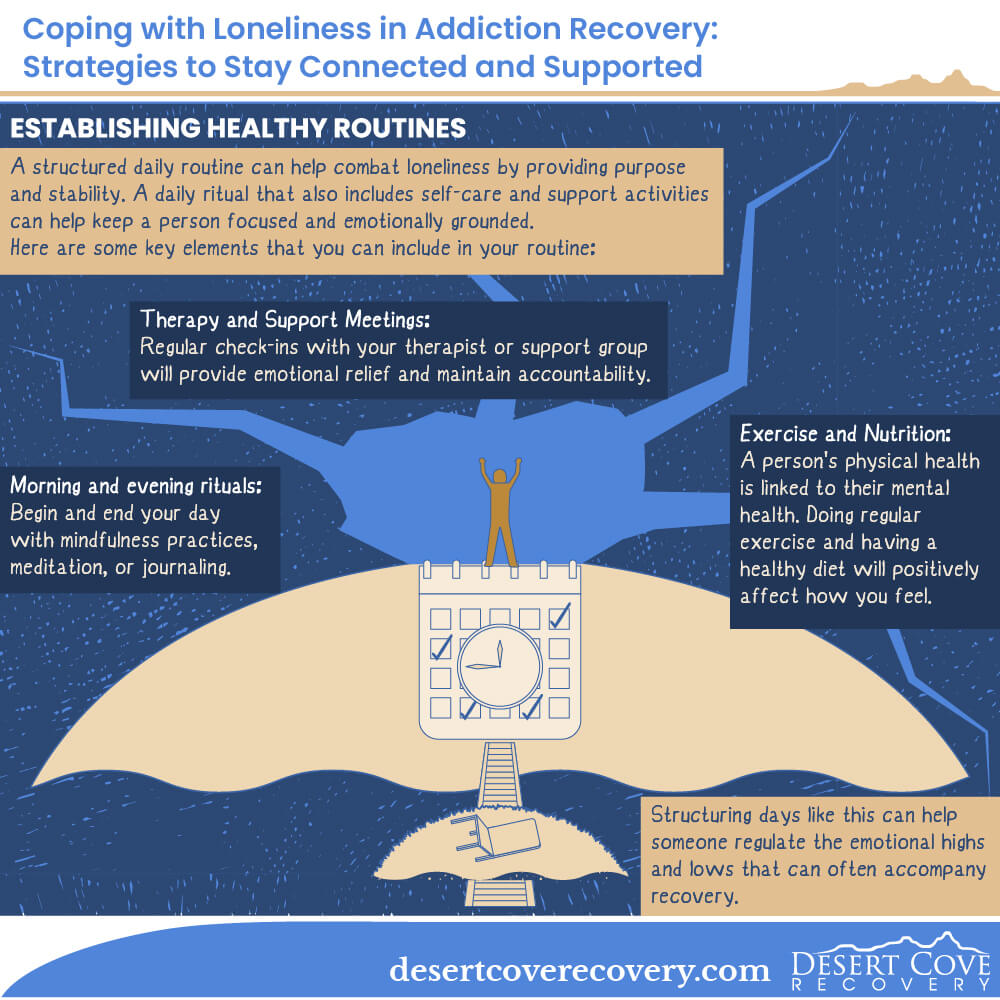
A structured daily routine can help combat loneliness by providing a sense of purpose and stability. Having a daily schedule that includes time for self-care, work, and support activities can help you stay focused and emotionally grounded. Key elements to consider in your routine include:
- Morning and Evening Rituals: Begin and end your day with mindfulness practices, meditation, or journaling.
- Therapy and Support Meetings: Regular check-ins with your therapist or support group will provide emotional relief and maintain accountability.
- Exercise and Nutrition: Physical health is linked to mental well-being, so maintaining a healthy diet and regular exercise routine is crucial.
Having a structured routine will help you manage feelings of loneliness and prevent the emotional highs and lows that often accompany recovery.
Practicing Self-Compassion
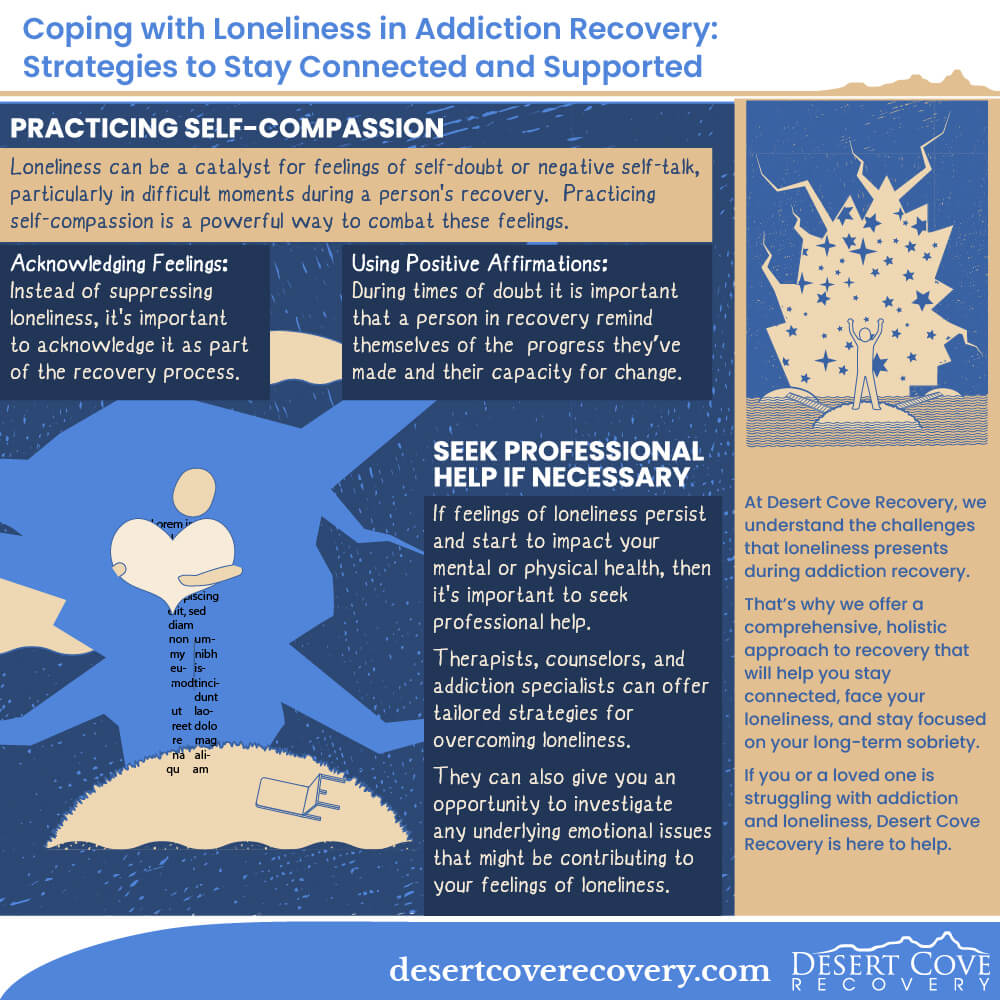
Loneliness can sometimes trigger self-doubt or negative self-talk, especially during challenging moments in recovery. Practicing self-compassion is a powerful tool to combat these feelings. Remember that it’s okay to experience loneliness, and being kind to yourself can help you work through these emotions without allowing them to interfere with your recovery.
- Acknowledge Your Feelings: Instead of suppressing loneliness, acknowledge it as part of the recovery process.
- Use Positive Affirmations: Remind yourself of the progress you’ve made and your capacity for change.
Being compassionate with yourself will prevent loneliness from spiraling into negative thinking, which can hinder your progress.
Seek Professional Help if Necessary
If feelings of loneliness persist and begin to affect your mental or physical health, it’s important to seek professional help. Therapists, counselors, and addiction specialists can offer tailored strategies to help you manage loneliness and stay on track with your recovery goals. Therapy also provides an opportunity to explore any underlying emotional issues that may be contributing to your feelings of isolation.
Staying Connected at Desert Cove Recovery
At Desert Cove Recovery, we understand the challenges that loneliness presents during addiction recovery. That’s why we offer a comprehensive, holistic approach that includes therapy, family support, and recovery-based activities to help you stay connected and emotionally supported. Our goal is to help you build the skills and relationships you need to maintain long-term sobriety and emotional well-being.
Take the Next Step Toward Healing
If you or a loved one is struggling with addiction and loneliness, Desert Cove Recovery is here to help. Contact us today to learn more about our personalized treatment plans and how we can support you on your journey to lasting recovery.
Sources:
[1] https://www.samhsa.gov/find-support/health-care-or-support/support-group-or-local-program
[2] https://pubmed.ncbi.nlm.nih.gov/32314504/