For many people, addiction recovery is not a quick process. Short-term programs can provide a strong start, but lasting sobriety often requires more time and support. Long-term rehab programs offer individuals the opportunity to dig deeper into the causes of addiction, develop healthier habits, and prepare for life beyond treatment.
At Desert Cove Recovery Center in Arizona, we’ve seen how extended care can transform lives. By giving clients the time and space they need to heal, long-term rehab helps build the foundation for sustainable recovery.
Why Short-Term Rehab May Not Be Enough
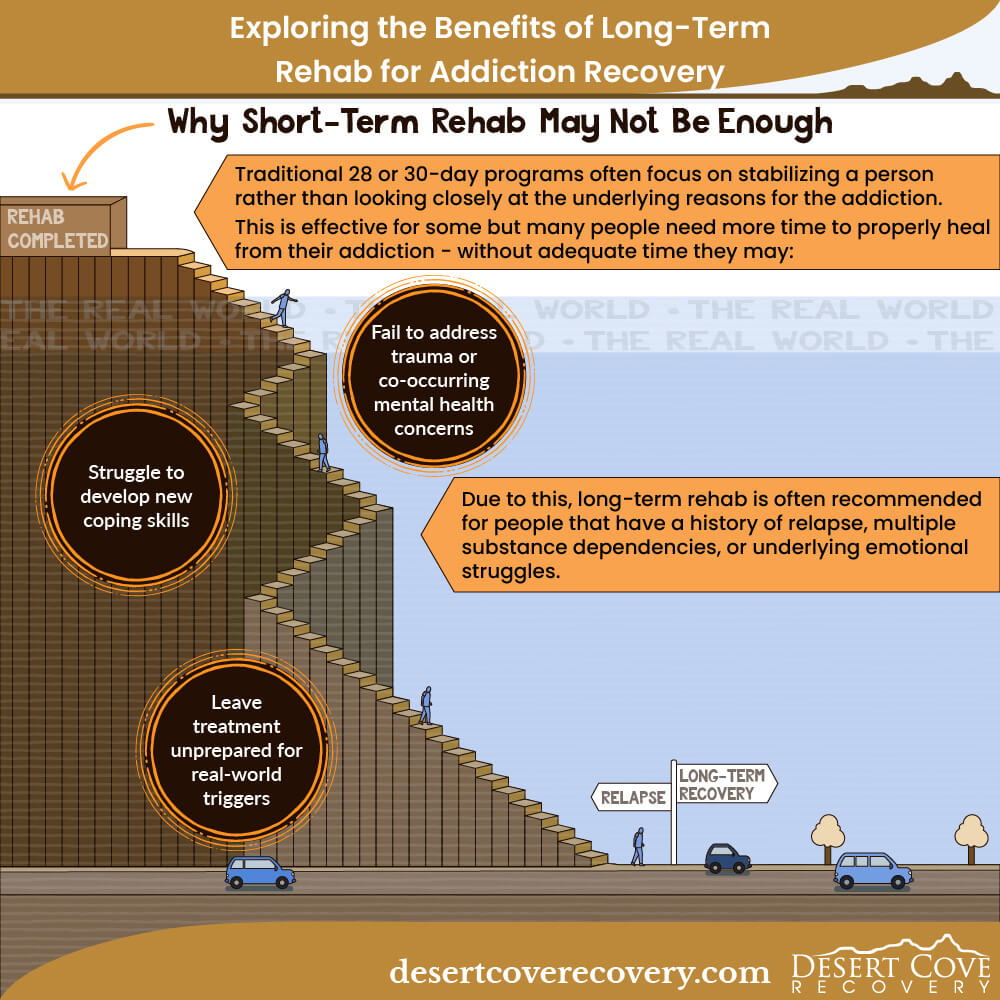
Traditional 28- or 30-day programs can be effective for some, but they often focus on stabilizing the individual rather than addressing the deeper issues fueling addiction. Addiction is a chronic condition that impacts the brain, body, and emotions. Healing from these effects rarely happens in a matter of weeks.
Without adequate time, individuals may:
- Struggle to develop new coping skills
- Fail to address trauma or co-occurring mental health concerns
- Leave treatment unprepared for real-world triggers
This is why long-term rehab is often recommended for those with a history of relapse, multiple substance dependencies, or underlying emotional struggles.
The Key Benefits of Long-Term Rehab
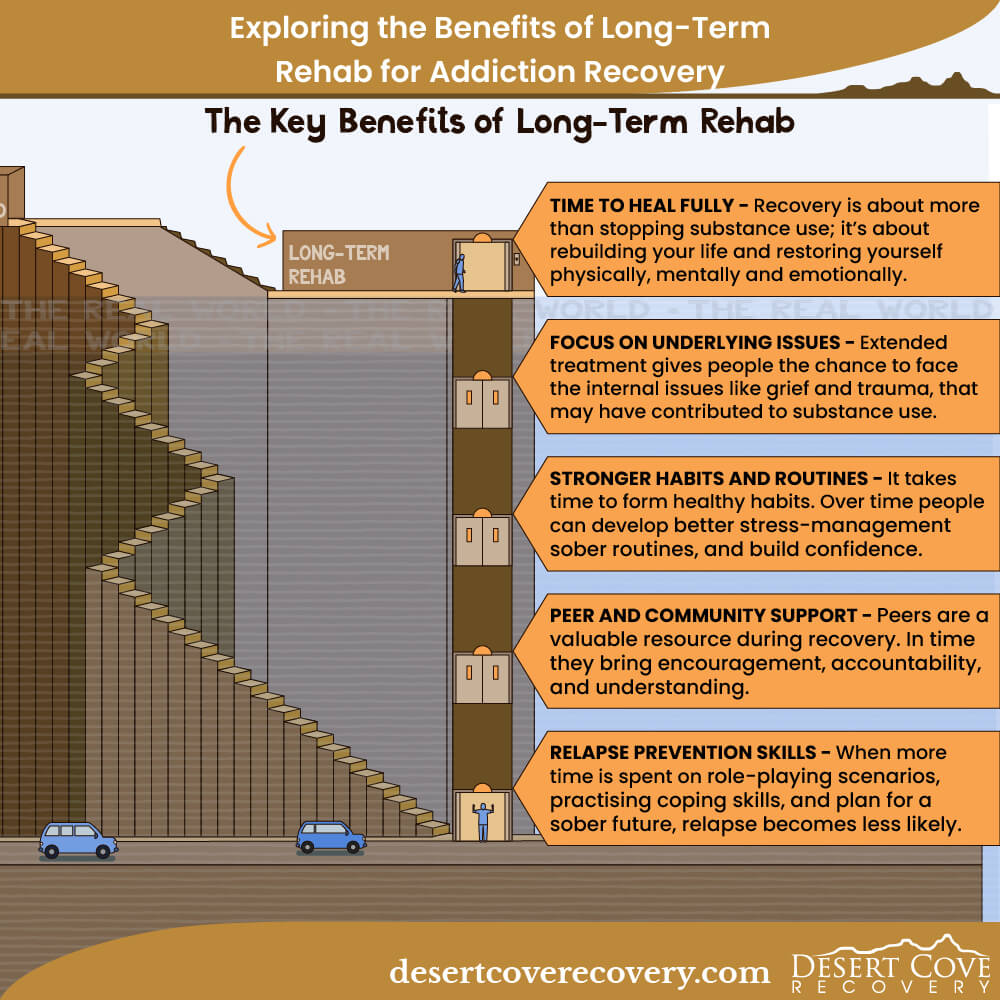
1. Time to Heal Fully
Recovery involves more than stopping substance use; it’s about rebuilding a healthy life. Long-term rehab allows clients to gradually restore balance in their physical health, mental clarity, and emotional resilience.
2. Focus on Underlying Issues
Extended treatment provides space to work through trauma, grief, or mental health conditions that may have contributed to substance use. Addressing these root causes reduces the risk of relapse.
3. Stronger Habits and Routines
Healthy habits take time to form. With longer treatment, clients can practice sober routines, learn stress-management techniques, and build confidence in their ability to live substance-free.
4. Peer and Community Support
Relationships with peers in recovery play a crucial role in healing. Over time, clients form deeper connections that provide encouragement, accountability, and understanding.
5. Relapse Prevention Skills
Extended programs give clients repeated opportunities to practice coping skills, role-play difficult scenarios, and plan for life after rehab. This hands-on experience helps prevent setbacks once treatment ends.
What Long-Term Rehab Looks Like at Desert Cove Recovery
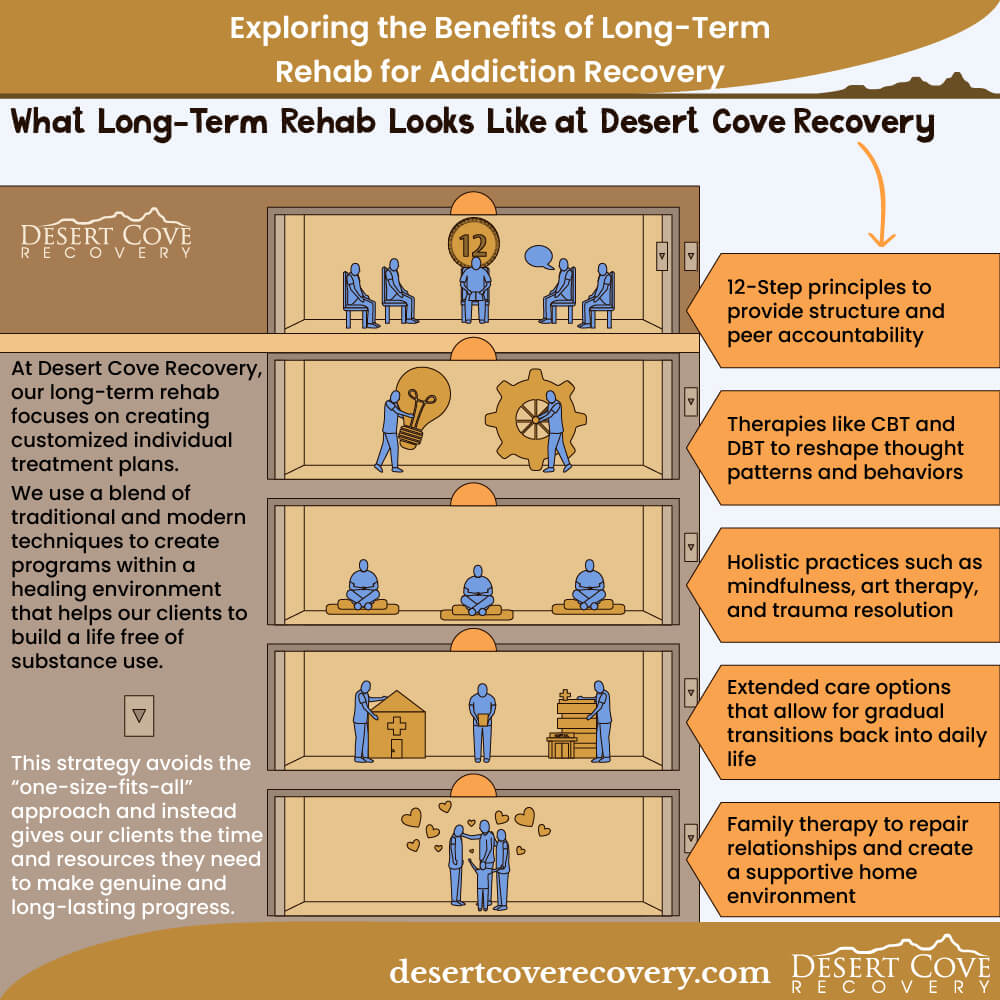
At Desert Cove Recovery, our long-term rehab approach blends traditional and modern methods. Each treatment plan is customized to the individual and may include:
- 12-Step principles to provide structure and peer accountability
- Therapies like CBT and DBT to reshape thought patterns and behaviors
- Holistic practices such as mindfulness, art therapy, and trauma resolution
- Extended care options that allow for gradual transitions back into daily life
- Family therapy to repair relationships and create a supportive home environment
We know that recovery is not “one-size-fits-all.” Our goal is to provide the time and resources each client needs to heal at their own pace.
Who Can Benefit Most from Long-Term Rehab?
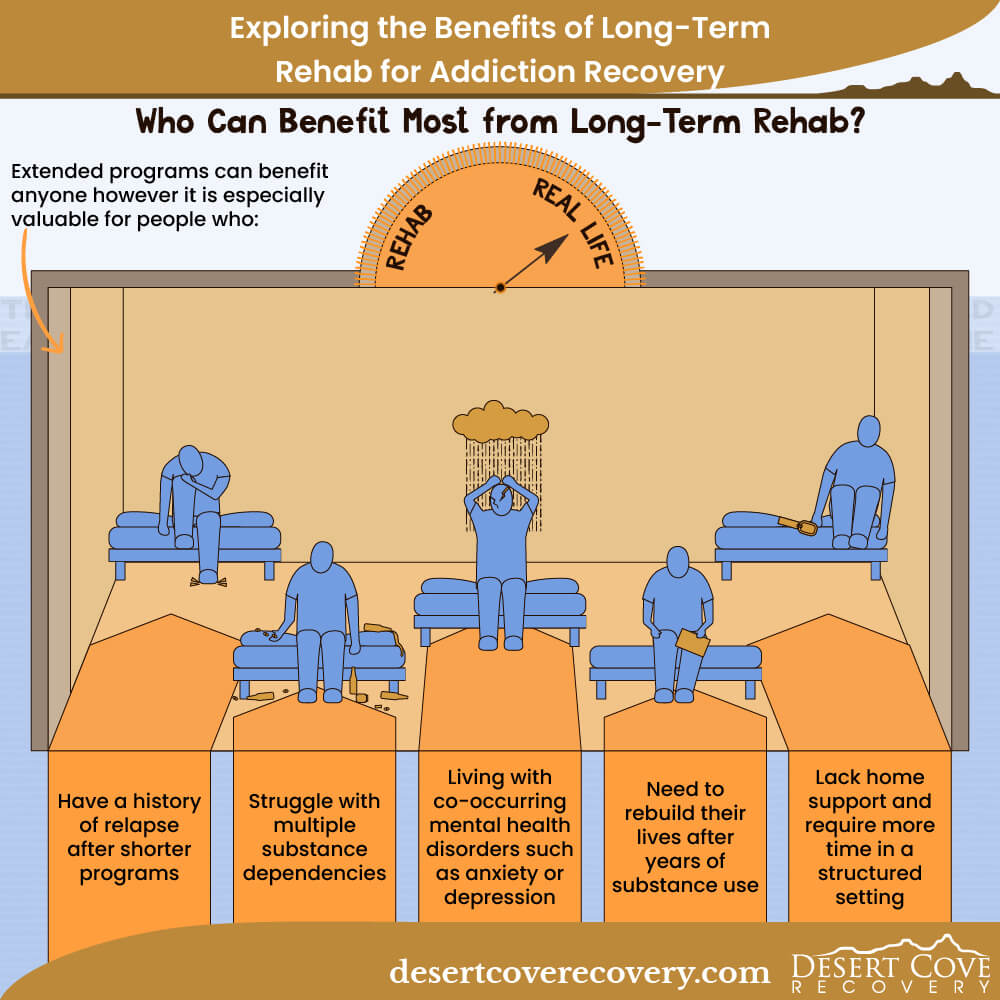
While extended programs can help anyone, they are especially valuable for individuals who:
- Have a history of relapse after shorter programs
- Struggle with multiple substance dependencies
- Live with co-occurring mental health disorders such as anxiety or depression
- Need to rebuild their lives after years of substance use
- Lack a supportive environment at home and require more time in a structured setting
For these individuals, long-term rehab can provide the stability and support that shorter stays may not.
Transitioning Back to Everyday Life

One of the greatest advantages of long-term rehab is the gradual transition it offers. Instead of being discharged abruptly, clients often move through levels of care, from intensive therapy to outpatient support and aftercare planning.
This step-down approach makes it easier to:
- Reinforce healthy coping mechanisms
- Continue building confidence in real-life settings
- Stay connected to professional and peer support networks
Recovery doesn’t end when treatment does. Long-term programs prepare clients for the realities of sober living while keeping them connected to resources that help maintain progress.
The Lasting Value of Extended Treatment
Sobriety is not a quick fix; it’s a lifelong commitment. While long-term rehab requires more time upfront, it often saves time, money, and heartache in the long run by reducing the likelihood of relapse.
At Desert Cove Recovery, we’ve witnessed clients who once doubted they could change leave with a renewed sense of hope, purpose, and stability. By investing in extended care, they gave themselves the best chance at a future free from addiction.
Take the Next Step Toward Lasting Sobriety
If you or someone you love has struggled with repeated relapse or feels overwhelmed by the idea of recovery, long-term rehab may be the answer. By providing time, structure, and comprehensive care, extended treatment offers a path to true healing.
At Desert Cove Recovery Center in Arizona, our holistic programs are designed to meet each client where they are and guide them toward lasting sobriety.
Contact Desert Cove Recovery today to learn more about our long-term rehab options and discover how we can help you or your loved one build a brighter, healthier future.
Sources:
[1] https://nida.nih.gov/sites/default/files/podat-3rdEd-508.pdf?utm_source=chatgpt.com
[2] https://www.samhsa.gov/substance-use/recovery?utm_source=chatgpt.com