When you’re navigating the challenging journey of recovery from substance use disorder, sleep might seem like just another struggle to endure. Yet quality rest is far more than a luxury—it’s a fundamental pillar of healing that directly impacts your ability to maintain sobriety, regulate emotions, and rebuild your health.
Understanding the critical connection between sleep and recovery can transform your treatment experience and set the foundation for lasting wellness.
The Sleep-Addiction Connection
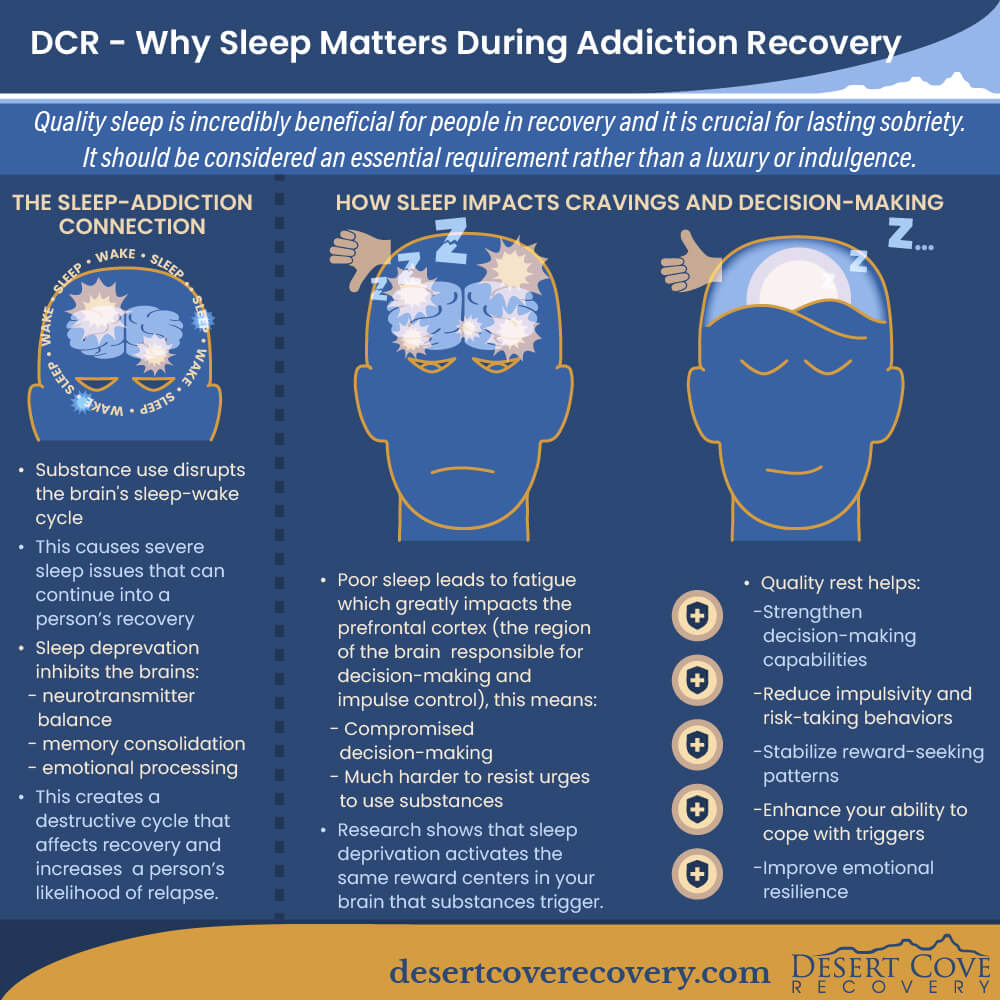
Substance use disrupts your brain’s natural sleep-wake cycles, often causing severe sleep disturbances that persist well into recovery, according to the National Institute on Drug Abuse. Many individuals seeking treatment at an Arizona rehab discover that sleep problems have become deeply intertwined with their substance use patterns.
Your brain relies on sleep to restore neurotransmitter balance, process emotions, and consolidate memories. When substance use disorder interrupts these processes, the resulting sleep deprivation creates a destructive cycle that can undermine your recovery efforts and increase relapse risk.
How Sleep Impacts Cravings and Decision-Making
Poor sleep dramatically increases vulnerability to cravings. When you’re exhausted, your prefrontal cortex—the brain region responsible for decision-making and impulse control—functions less effectively. This compromised state makes it significantly harder to resist urges to use substances.
Research shows that sleep deprivation activates the same reward centers in your brain that substances trigger. At a holistic addiction treatment center, addressing sleep becomes essential to managing cravings effectively.
Quality rest helps:
- Strengthen decision-making capabilities
- Reduce impulsivity and risk-taking behaviors
- Stabilize reward-seeking patterns
- Enhance your ability to cope with triggers
- Improve emotional resilience
Sleep and Emotional Regulation
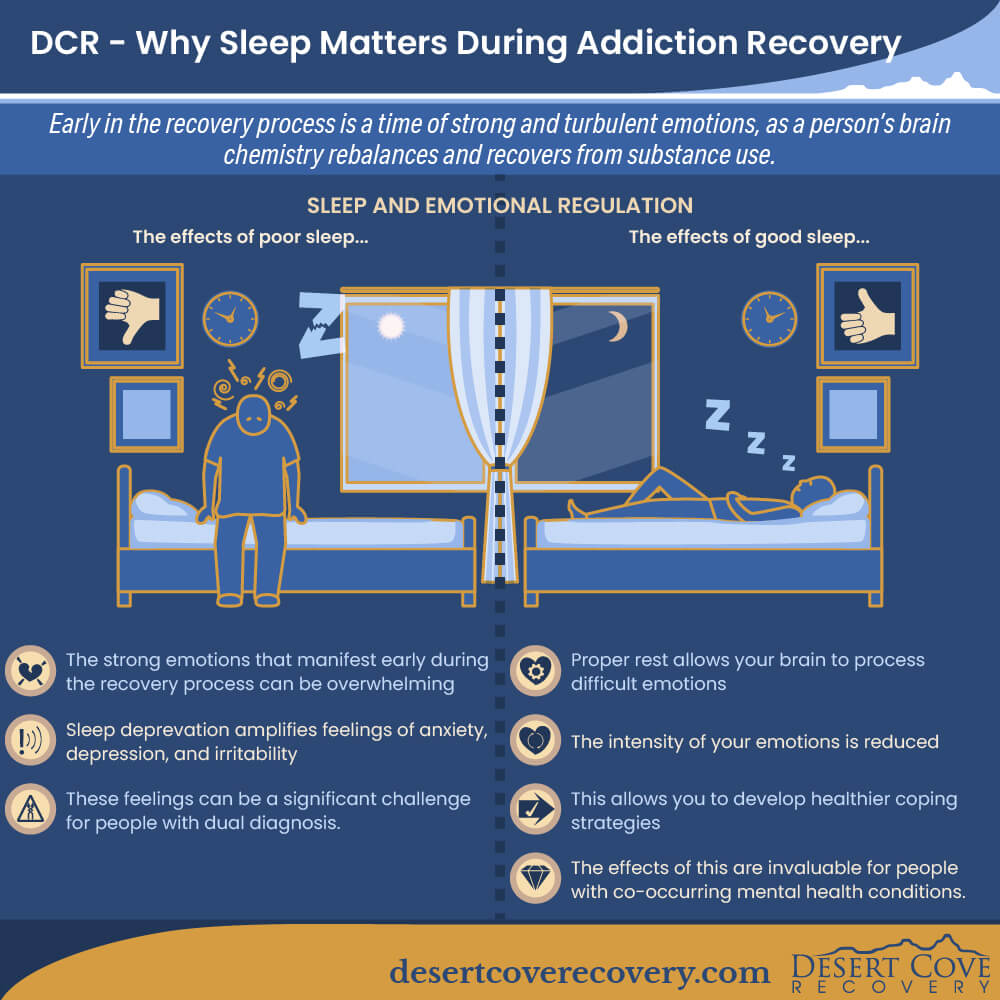
Early recovery brings intense emotions as your brain chemistry rebalances. Without adequate sleep, these feelings become overwhelming. Sleep deprivation amplifies anxiety, depression, and irritability—common challenges for individuals with dual diagnosis conditions.
At Desert Cove Recovery, our caring, highly educated professionals understand that emotional stability requires proper rest. Sleep allows your brain to process difficult emotions, reducing their intensity and helping you develop healthier coping mechanisms.
For those managing co-occurring mental health conditions like anxiety, depression, or PTSD, quality sleep becomes even more critical to maintaining both mental wellness and sobriety.
Physical Healing Through Rest
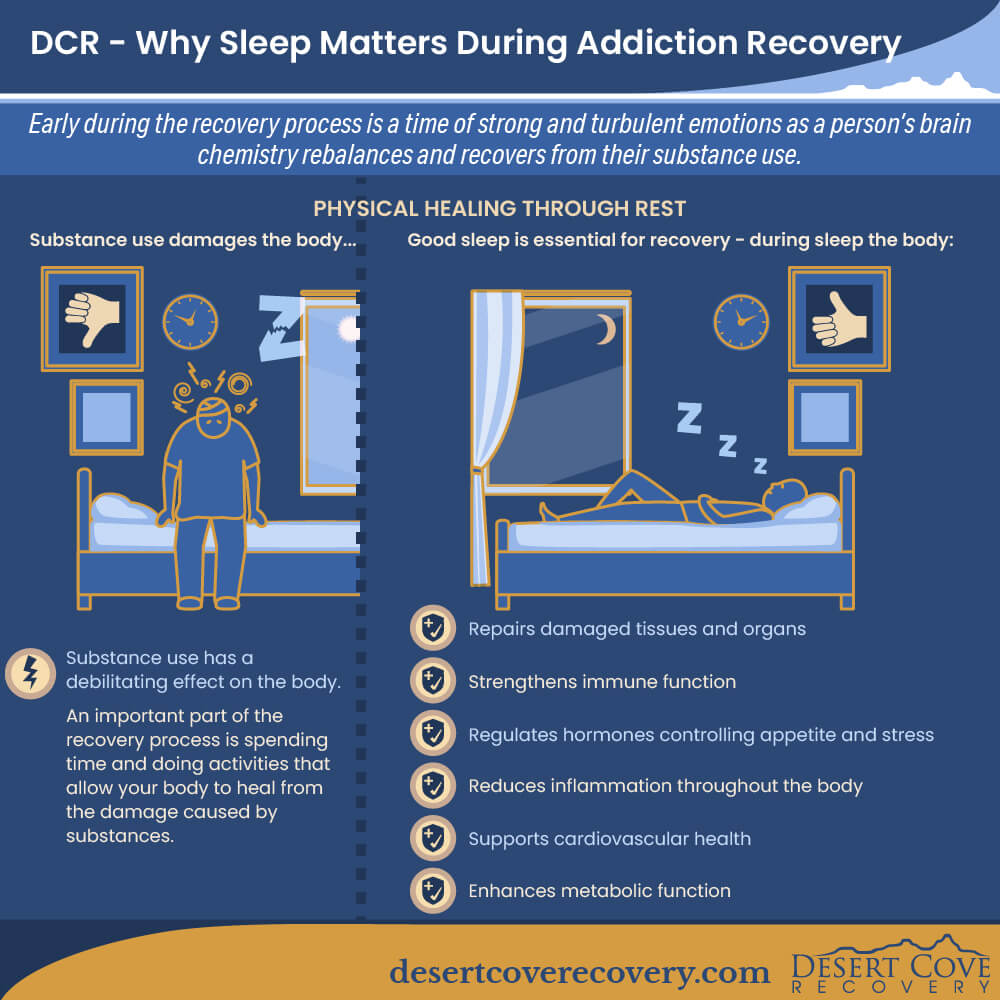
Substance use takes a significant toll on your body. Sleep provides the essential recovery time your physical systems need to heal, according to the Centers for Disease Control and Prevention.
During deep sleep, your body:
- Repairs damaged tissues and organs
- Strengthens immune function
- Regulates hormones controlling appetite and stress
- Reduces inflammation throughout the body
- Supports cardiovascular health
- Enhances metabolic function
The holistic approach employed at our Scottsdale treatment center integrates sleep hygiene into custom addiction treatment plans because physical healing directly supports psychological recovery.
Creating Healthy Sleep Habits in Recovery
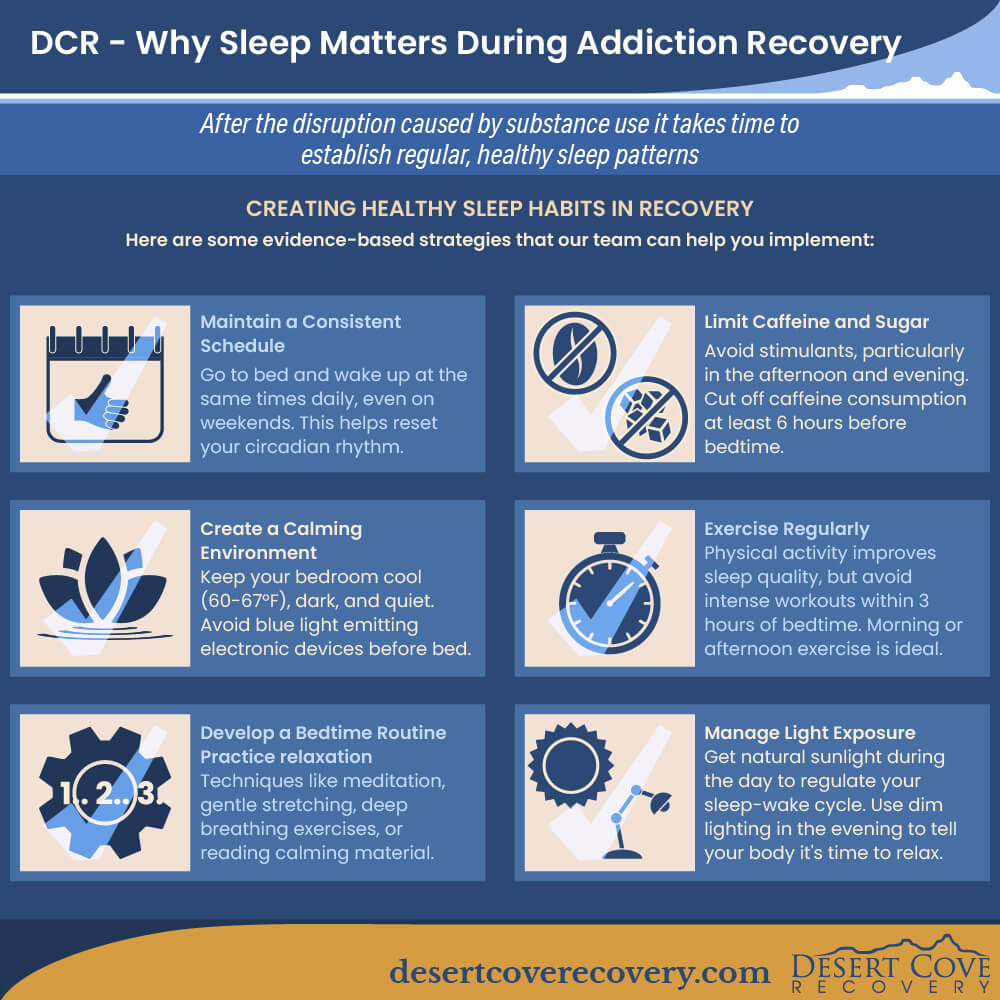
Establishing consistent sleep patterns takes time, especially after substance use has disrupted your natural rhythms. Here are evidence-based strategies that our treatment team can help you implement:
Maintain a Consistent Schedule
Go to bed and wake up at the same times daily, even on weekends. This helps reset your circadian rhythm.
Create a Calming Environment
Keep your bedroom cool (60-67°F), dark, and quiet. Remove electronic devices that emit blue light at least one hour before bed.
Develop a Bedtime Routine
Practice relaxation techniques like meditation, gentle stretching, deep breathing exercises, or reading calming material.
Limit Caffeine and Sugar
Avoid stimulants, particularly in the afternoon and evening. Cut off caffeine consumption at least 6 hours before bedtime.
Exercise Regularly
Physical activity improves sleep quality, but avoid intense workouts within 3 hours of bedtime. Morning or afternoon exercise is ideal.
Manage Light Exposure
Get natural sunlight during the day to regulate your sleep-wake cycle. Use dim lighting in the evening to signal to your body that it’s time to wind down.
Professional Support for Sleep Issues
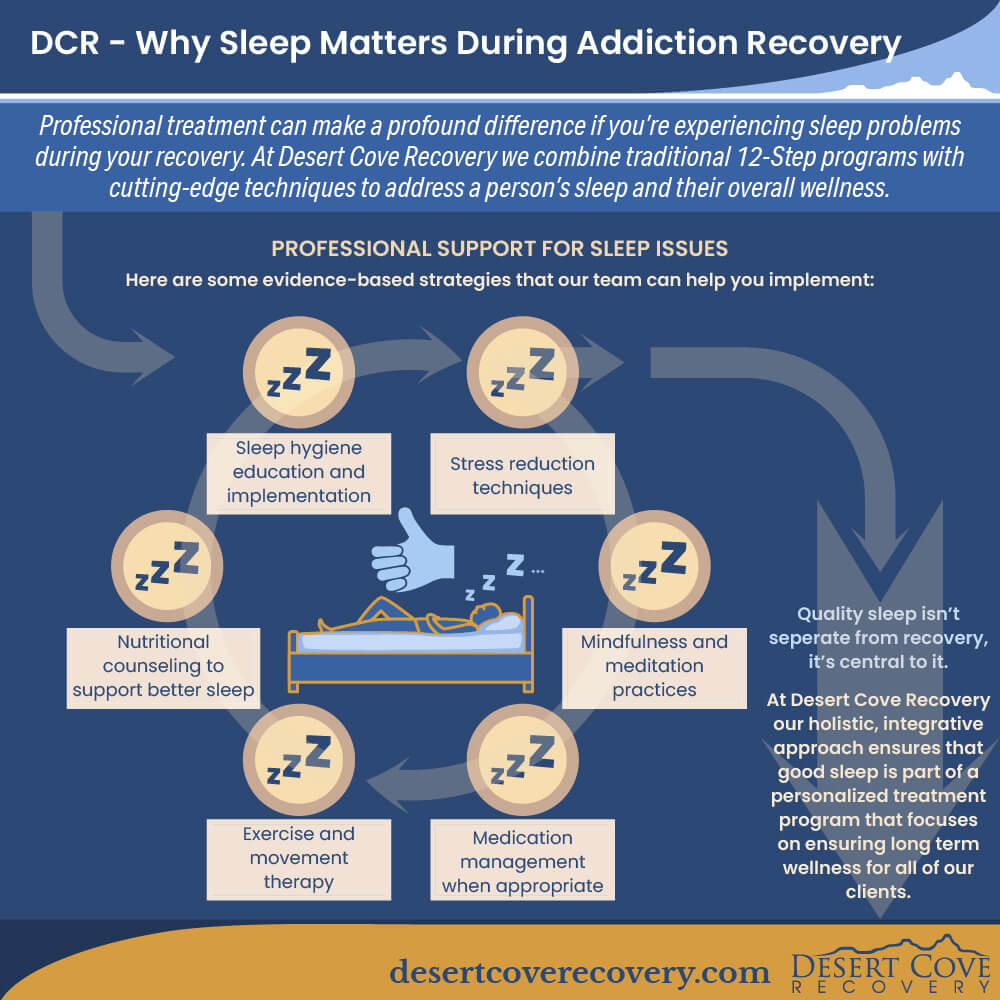
If you’re experiencing persistent sleep problems during recovery, professional treatment can make a profound difference. Desert Cove Recovery’s integrative approach combines traditional 12-Step programs with cutting-edge techniques addressing sleep and overall wellness.
Our comprehensive programs—including residential treatment, intensive outpatient services, and family therapy—recognize that sustainable recovery requires addressing every aspect of health, including restorative sleep.
Our holistic approach includes:
- Sleep hygiene education and implementation
- Stress reduction techniques
- Nutritional counseling to support better sleep
- Mindfulness and meditation practices
- Exercise and movement therapy
- Medication management when appropriate
We view sleep as an integral component of the mind-body-spirit healing process, not as a separate issue to address later.
Begin Your Journey to Restorative Sleep and Lasting Recovery
Quality sleep isn’t separate from recovery—it’s central to it. At Desert Cove Recovery, we create personalized treatment plans addressing sleep, mental health, and substance use together through our holistic, integrative approach.
Our compassionate team of experienced professionals is ready to support you in building the foundation for a happy, healthy, drug- and alcohol-free life. You don’t have to face sleepless nights and recovery challenges alone.
Contact Desert Cove Recovery today to learn how our comprehensive Arizona rehab programs can transform your sleep and strengthen your path to lasting wellness.
Sources:
[1] https://www.cdc.gov/sleep/
[2] https://www.cdc.gov/niosh/work-hour-training-for-nurses/longhours/mod2/05.html