Completing a residential treatment program or intensive outpatient therapy is a tremendous achievement, but it’s just the beginning of your recovery journey. Many individuals with substance use disorders feel confident and hopeful at discharge, only to face unexpected challenges when they return to daily life. Without structured aftercare planning, the risk of relapse increases significantly during those critical first months post-treatment.
At Desert Cove Recovery, our holistic approach doesn’t end when formal treatment concludes. We believe comprehensive aftercare planning is essential for sustaining long-term sobriety and building the healthy, fulfilling life you deserve.
What Happens After Treatment Ends?
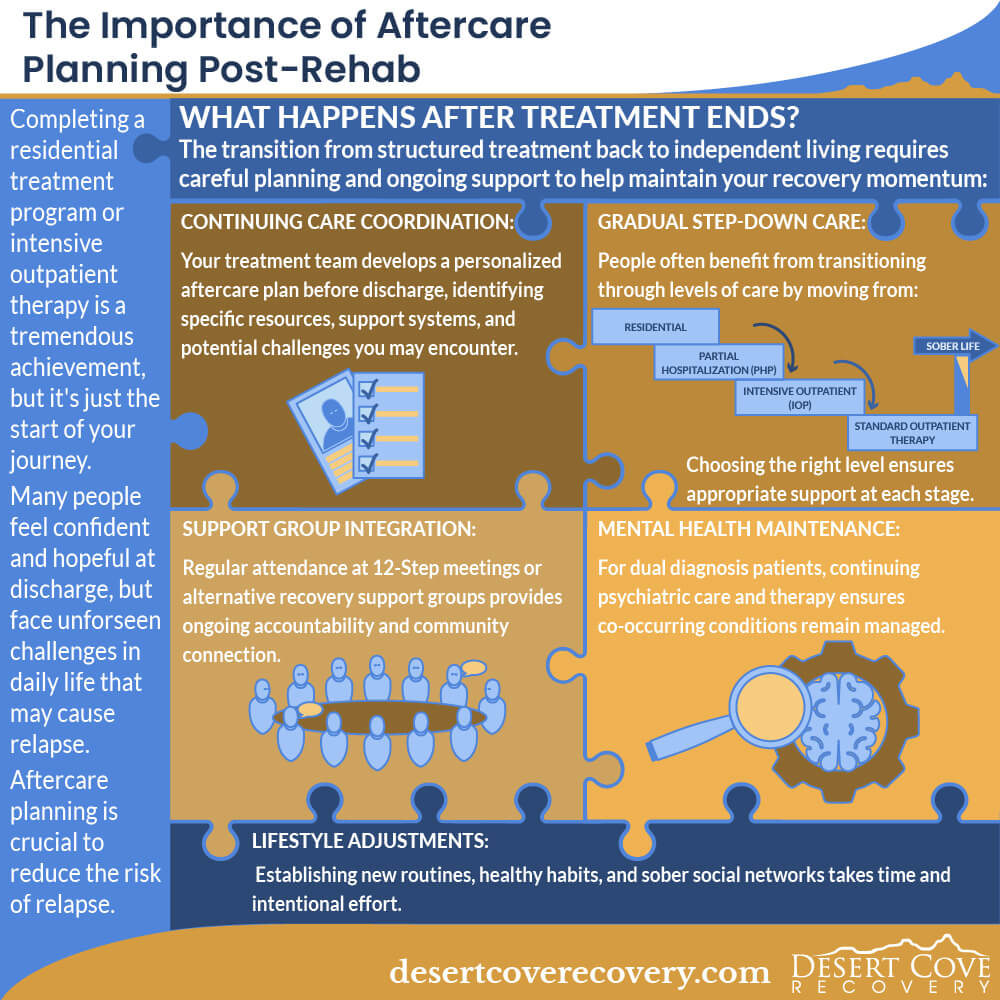
The transition from structured treatment back to independent living requires careful planning and ongoing support. After completing your program at our Arizona treatment center, several important steps help maintain your recovery momentum:
Continuing Care Coordination: Your treatment team develops a personalized aftercare plan before discharge, identifying specific resources, support systems, and potential challenges you may encounter.
Gradual Step-Down Care: Many individuals benefit from transitioning through levels of care, moving from residential to partial hospitalization (PHP), then to intensive outpatient (IOP), and finally to standard outpatient therapy. Choosing the right level of care ensures you receive appropriate support at each stage.
Support Group Integration: Regular attendance at 12-Step meetings or alternative recovery support groups provides ongoing accountability and community connection.
Mental Health Maintenance: For dual diagnosis patients, continuing psychiatric care and therapy ensures co-occurring conditions remain managed.
Lifestyle Adjustments: Establishing new routines, healthy habits, and sober social networks takes time and intentional effort.
The Real Risk: What Data Shows About Relapse Without Aftercare

Research consistently demonstrates that aftercare participation dramatically improves recovery outcomes. Studies show that individuals who engage in aftercare services for at least one year following treatment have significantly higher rates of sustained recovery.
Conversely, those without structured aftercare face elevated relapse risk during the first 90 days post-treatment, a vulnerable period when old triggers resurface without the protective environment of residential care. Common relapse triggers include:
- Returning to previous living situations where substance use occurred
- Reconnecting with people who actively use substances
- Experiencing major life stressors without adequate coping mechanisms
- Underestimating the ongoing nature of recovery
- Discontinuing medications for substance use disorder or mental health conditions
The transition period challenges even the most committed individuals. Aftercare planning addresses these predictable obstacles before they become overwhelming.
What Effective Aftercare Actually Looks Like
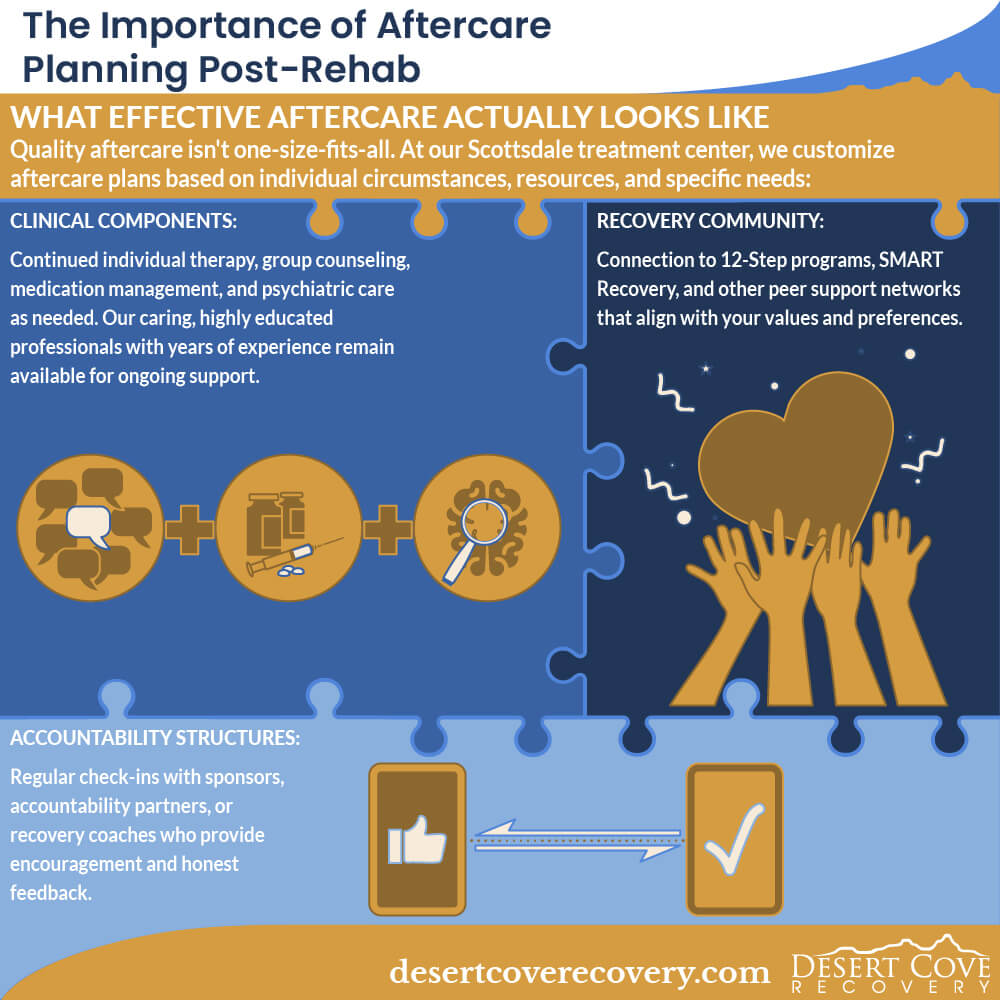
Quality aftercare isn’t one-size-fits-all. At our Scottsdale treatment center, we customize aftercare plans based on individual circumstances, resources, and specific needs:
- Clinical Components: Continued individual therapy, group counseling, medication management, and psychiatric care as needed. Our caring, highly educated professionals with years of experience remain available for ongoing support.
- Recovery Community: Connection to 12-Step programs, SMART Recovery, or other peer support networks that align with your values and preferences.
- Accountability Structures: Regular check-ins with sponsors, accountability partners, or recovery coaches who provide encouragement and honest feedback.
- Sober Living Environments: Transitional housing options offer structured, substance-free living while you rebuild independence. Extended addiction treatment provides this crucial bridge between intensive care and independent living.
- Family Involvement: Family therapy and education help loved ones understand their role in supporting your recovery journey.
- Holistic Wellness: Continuing practices introduced during treatment, including mindfulness, exercise, nutrition, and creative expression, support overall well-being.
- Relapse Prevention Planning: Identifying personal warning signs, developing response strategies, and knowing when to reach out for additional help.
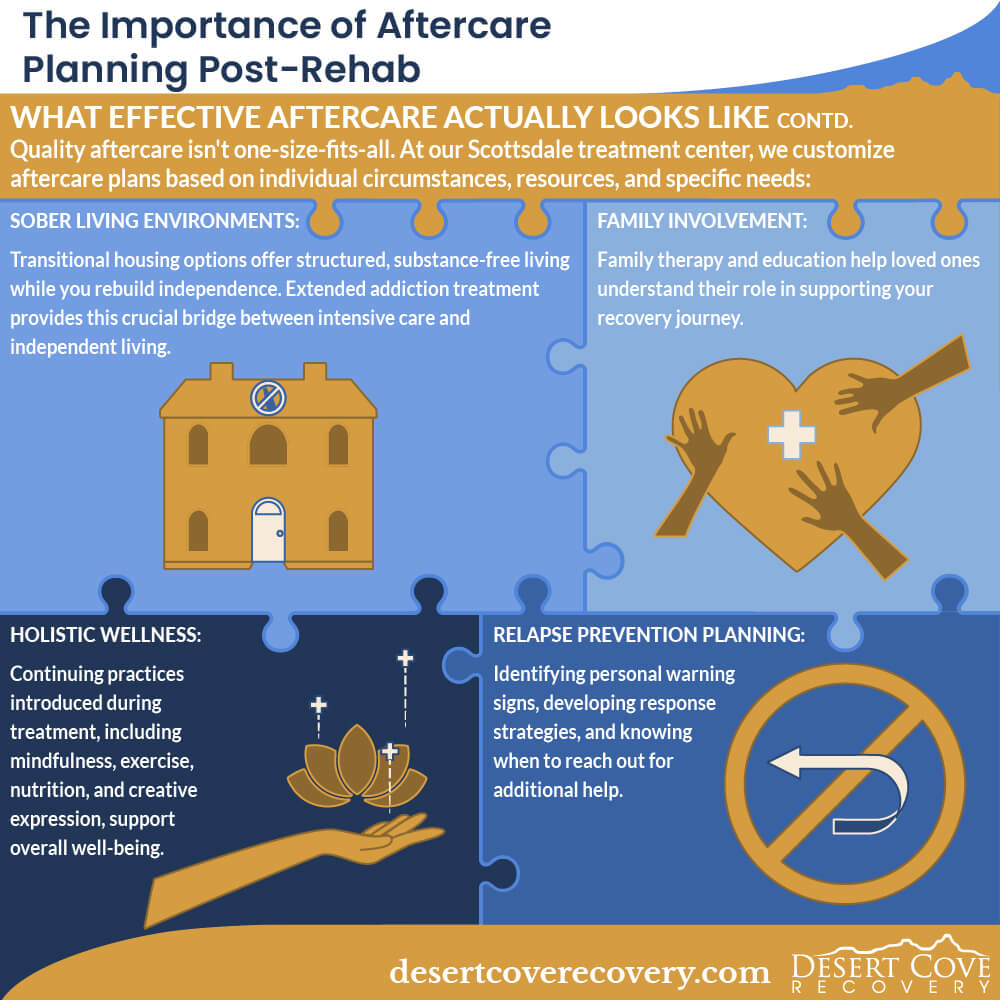
Effective aftercare integrates professional treatment with community support, addressing both clinical needs and real-world recovery challenges. It provides the foundation that allows newly developed recovery skills to solidify into lasting lifestyle changes.
Building Your Foundation for Lasting Recovery
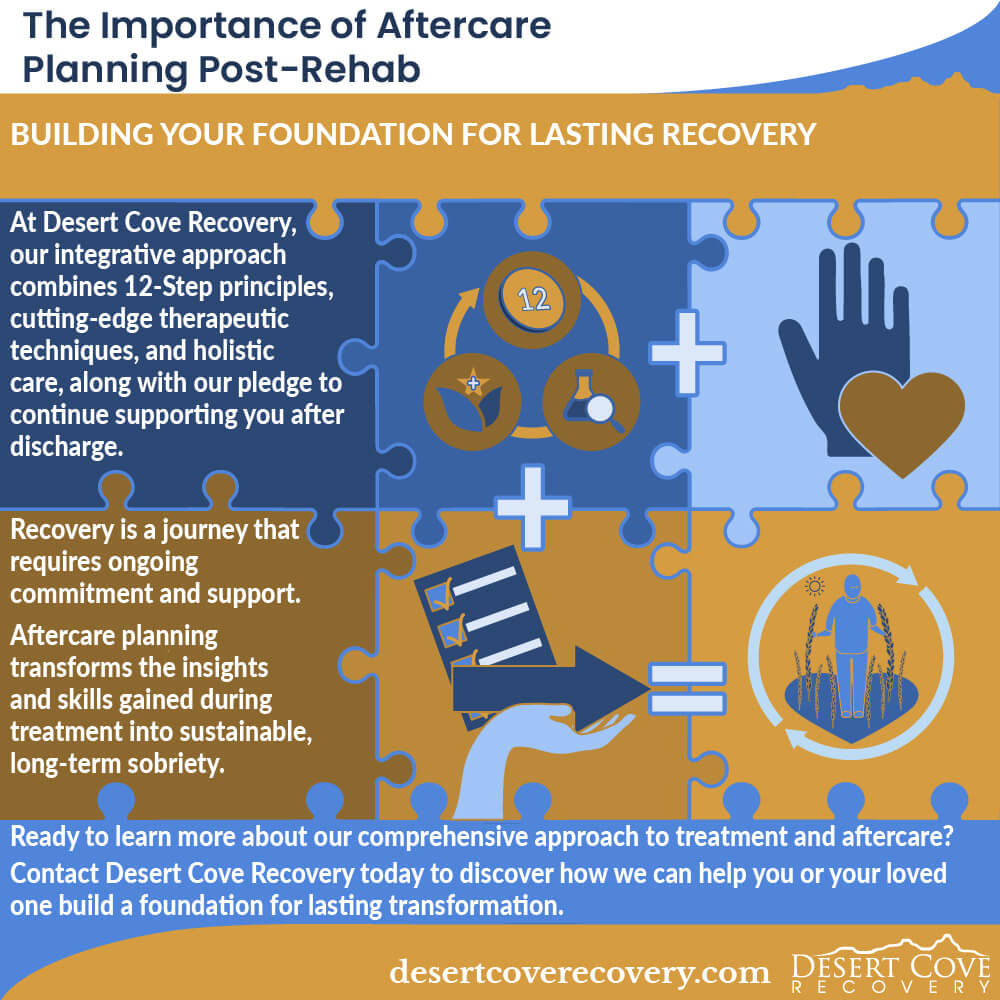
Recovery is a journey that requires ongoing commitment and support. Aftercare planning transforms the insights and skills gained during treatment into sustainable, long-term sobriety. At Desert Cove Recovery, our integrative approach combines 12-Step principles with cutting-edge therapeutic techniques, and we remain committed to supporting you beyond discharge.
Our holistic rehab in Arizona ensures you have the tools, connections, and confidence to thrive in recovery. With custom treatment plans tailored to your unique needs and caring professionals dedicated to your success, we help you build a happy, healthy, drug and alcohol-free life.
Ready to learn more about our comprehensive approach to treatment and aftercare? Contact Desert Cove Recovery today to discover how we can help you or your loved one build a foundation for lasting transformation.
Source:
[1] https://pmc.ncbi.nlm.nih.gov/articles/PMC4152944/