If you’ve noticed your teenager seems more anxious, withdrawn, or emotionally unstable than usual, their phone might hold more answers than you think. As parents in Scottsdale and across Arizona reach out to our team at Desert Cove Recovery, a common thread emerges: teens experiencing mental health crises often show patterns of problematic social media use that go far beyond typical screen time concerns.
This isn’t about demonizing technology. It’s about understanding when digital habits cross from normal adolescent behavior into clinical territory and recognizing the warning signs before they escalate into substance use, self-harm, or severe depression.
The Neuroscience Behind the Scroll: Understanding Dopamine and Teen Brains
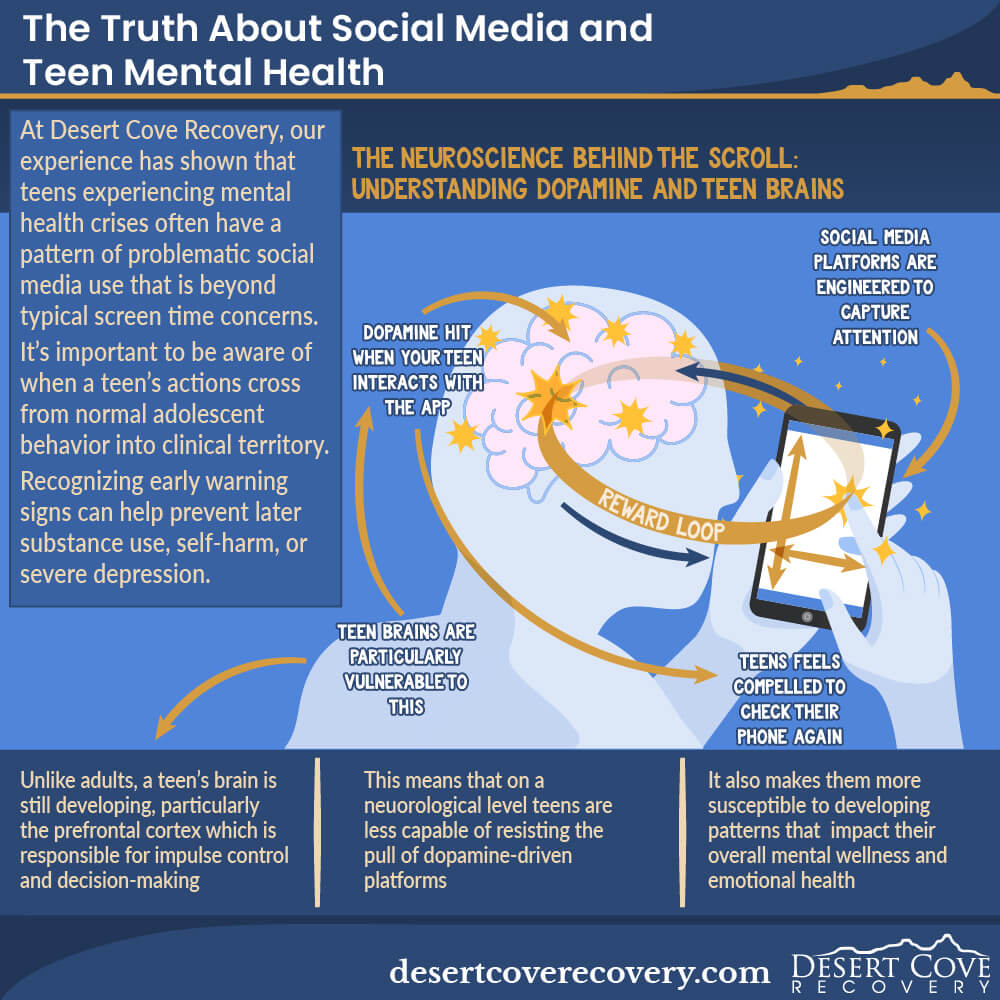
Social media platforms are engineered to capture attention, and teen brains are particularly vulnerable. Each like, comment, or notification triggers a dopamine release, the same neurotransmitter involved in substance use disorders. This creates a reward loop that keeps adolescents checking their phones compulsively, sometimes hundreds of times daily.
Unlike adults, teenage brains are still developing, particularly the prefrontal cortex responsible for impulse control and decision-making. This neurological reality means teens have less capacity to resist the pull of these dopamine-driven platforms, making them more susceptible to developing patterns that can affect their overall mental wellness and emotional health.
The Comparison Trap: When Self-Esteem Becomes a Clinical Concern
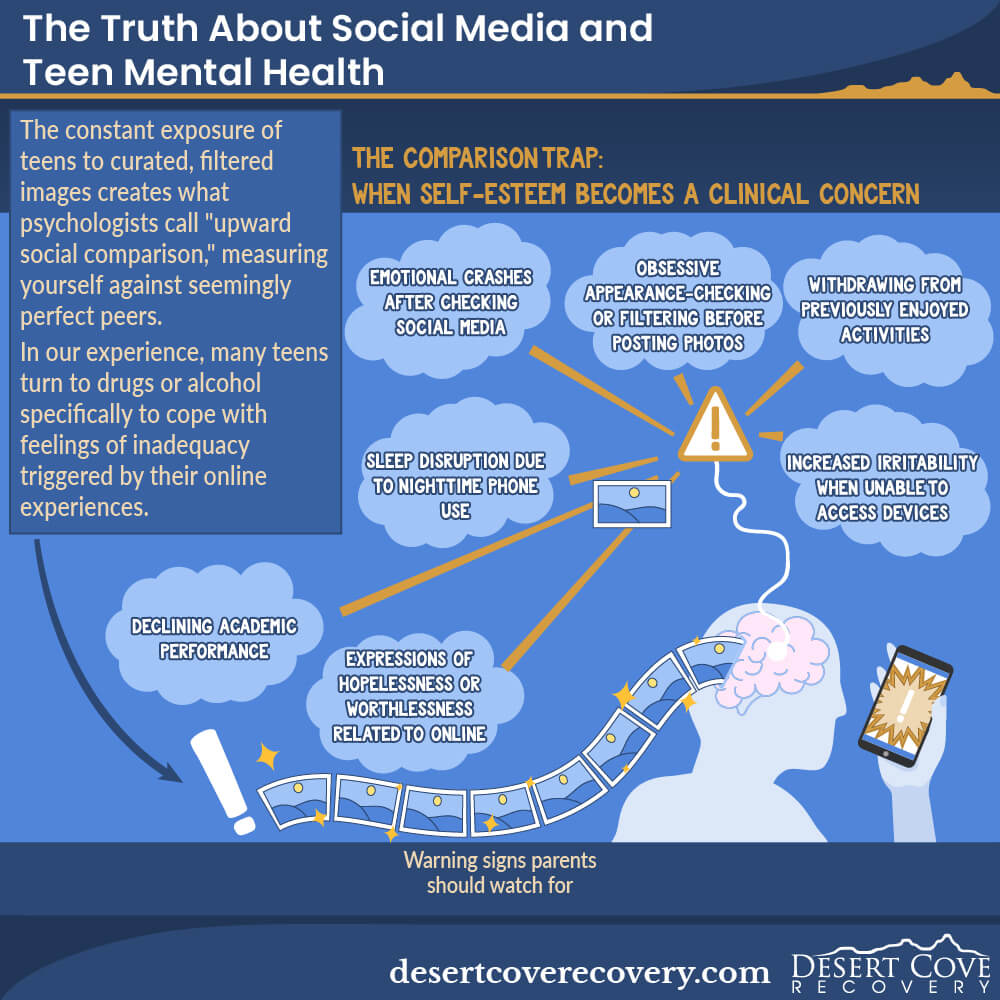
Constant exposure to curated, filtered images creates what psychologists call “upward social comparison,” measuring yourself against seemingly perfect peers. For teens already navigating identity formation, this becomes particularly damaging to their mental health.
At our Scottsdale treatment center, we frequently work with adolescents with dual diagnosis conditions where social media-fueled anxiety or depression co-occurs with substance use. Many teens share with us that they turned to drugs or alcohol specifically to cope with feelings of inadequacy triggered by their online experiences.
Warning Signs Parents Should Monitor:
- Obsessive appearance-checking or filtering before posting photos
- Emotional crashes after checking social media
- Withdrawing from previously enjoyed activities
- Declining academic performance
- Sleep disruption due to nighttime phone use
- Increased irritability when unable to access devices
- Expressions of hopelessness or worthlessness related to online interactions
Sleep Disruption: The Hidden Connection to Teen Mental Health
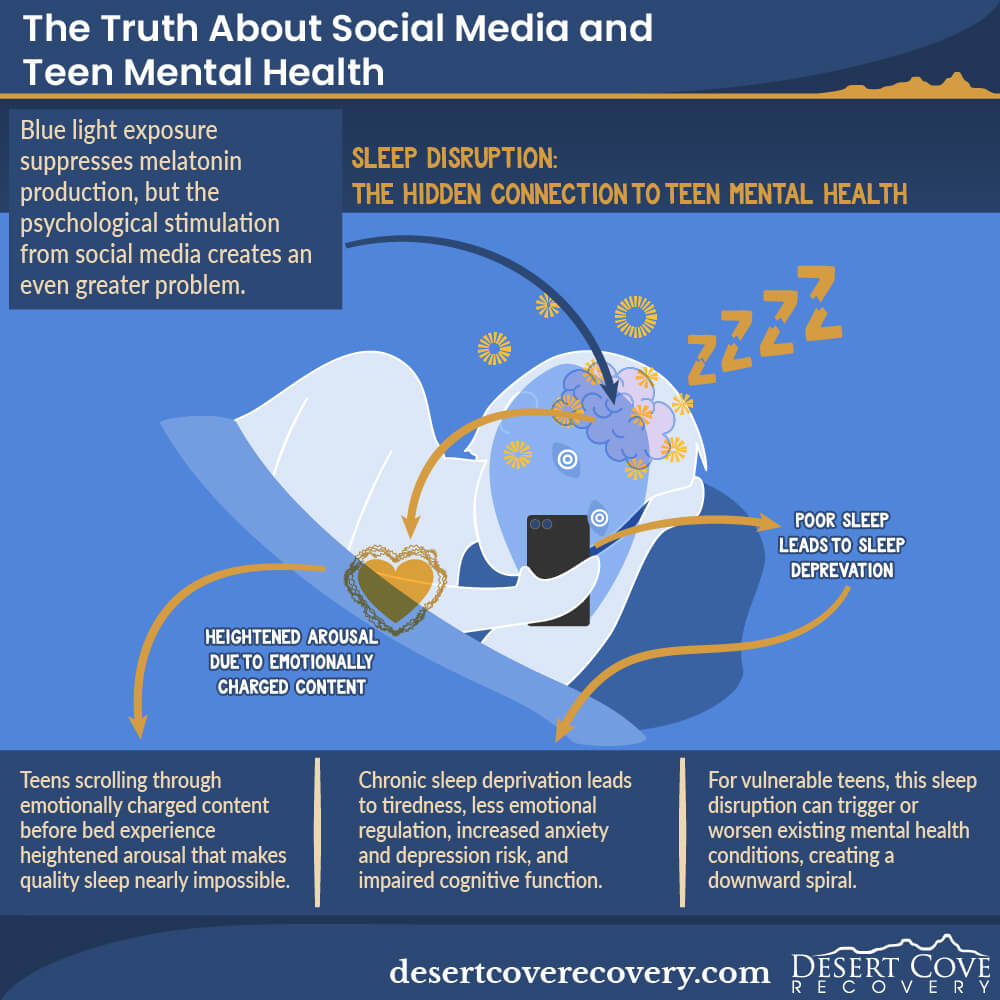
Blue light exposure suppresses melatonin production, but the psychological stimulation from social media creates an even more significant problem. Teens scrolling through emotionally charged content before bed experience heightened arousal that makes quality sleep nearly impossible.
Chronic sleep deprivation doesn’t just cause tiredness. It fundamentally alters emotional regulation, increases anxiety and depression risk, and impairs cognitive function. For vulnerable teens, this sleep disruption can trigger or worsen existing mental health conditions, creating a downward spiral. Sleep matters during recovery for both mental health and overall well-being, which is why we address sleep patterns as part of our holistic treatment approach.
Social Media Stress and Emotional Dysregulation: When to Seek Help
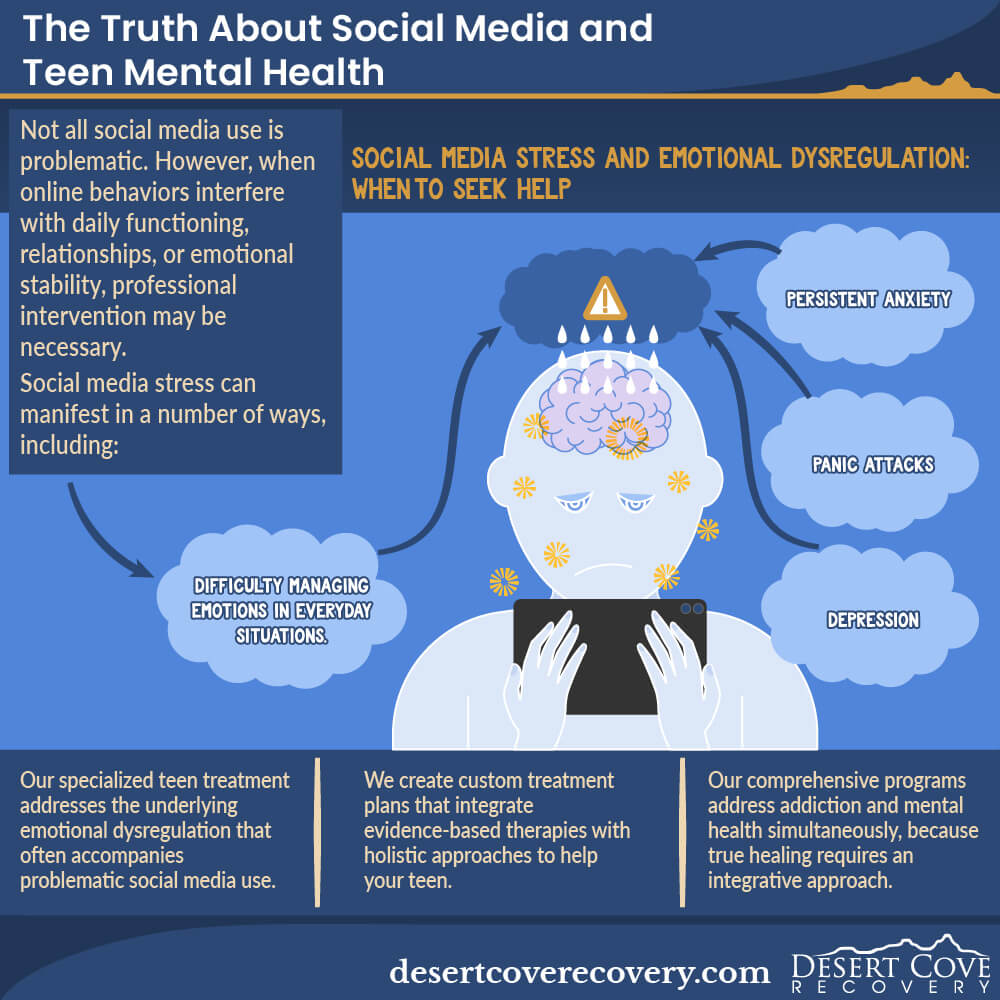
Not all social media use is problematic. However, when online behaviors interfere with daily functioning, relationships, or emotional stability, professional intervention may be necessary. Social media stress can manifest as persistent anxiety, panic attacks, depression, or difficulty managing emotions in everyday situations.
Our specialized teen treatment at Desert Cove Recovery addresses the underlying emotional dysregulation that often accompanies problematic social media use. Our caring, highly educated professionals create custom treatment plans that integrate evidence-based therapies with holistic approaches, helping teens develop healthy coping mechanisms and emotional resilience.
For teens also struggling with substance use, our comprehensive programs address both the mental health challenges and addiction simultaneously, because these issues rarely exist in isolation, and true healing requires an integrative approach.
Getting Help at Our Scottsdale Treatment Center
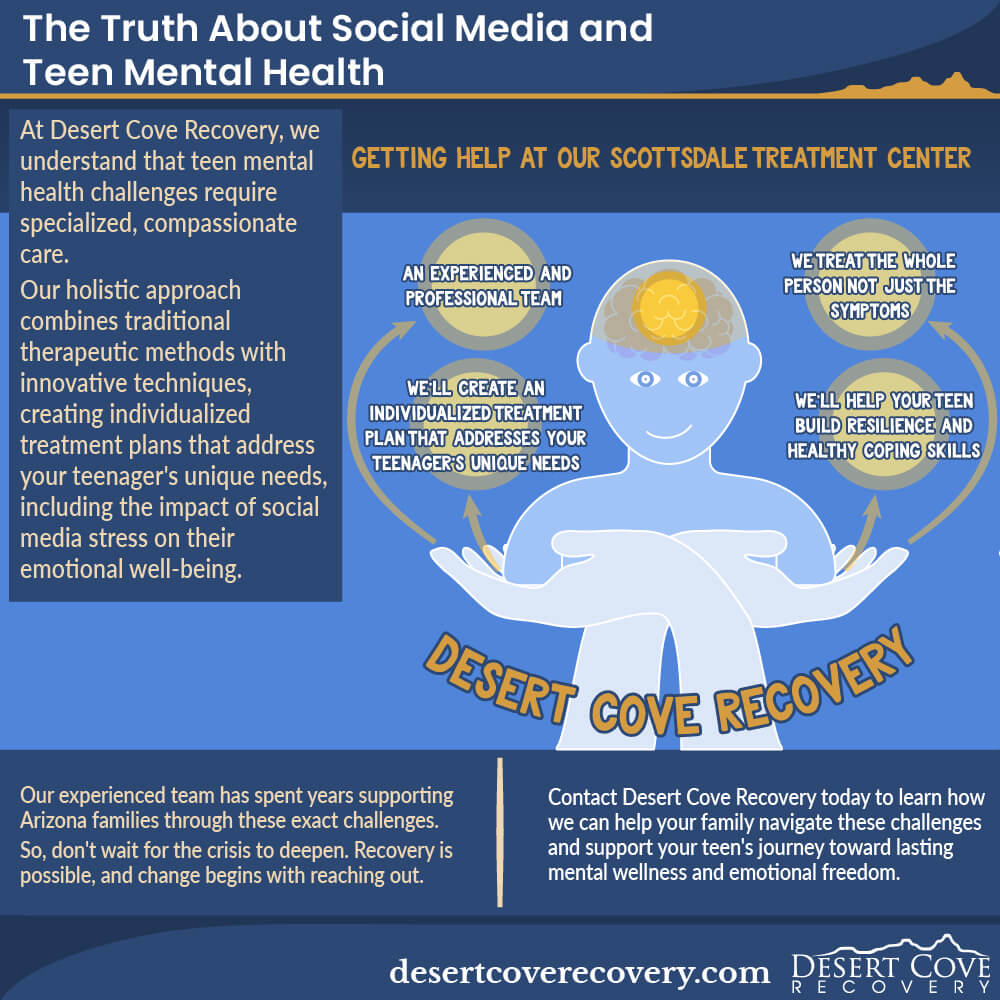
At Desert Cove Recovery, we understand that teen mental health challenges require specialized, compassionate care. Our holistic approach combines traditional therapeutic methods with innovative techniques, creating individualized treatment plans that address your teenager’s unique needs, including the impact of social media stress on their emotional well-being.
Our experienced team has spent years supporting Arizona families through these exact challenges. We believe in treating the whole person, not just symptoms, and we’re committed to helping your teen build the resilience and healthy coping skills necessary for a happy, healthy future.
Don’t wait for the crisis to deepen. Recovery is possible, and transformation begins with reaching out. Contact Desert Cove Recovery today to learn how our experienced, caring team at our Scottsdale treatment center can help your family navigate these challenges and support your teen’s journey toward lasting mental wellness and emotional freedom.
Source:
[1] https://pmc.ncbi.nlm.nih.gov/articles/PMC5844157/